A partial solar eclipse is set to grace UK skies on Wednesday evening, August 12, 2026, with the south west offering prime viewing conditions. The Royal Observatory Greenwich (ROG) explains that a solar eclipse occurs "when the Moon moves between the Sun and Earth, resulting in the Sun's light being blocked either partially or fully for viewers in certain locations on Earth."
Timing and Coverage
From London, Bristol, and Cardiff, 'first contact' begins at 6.17pm, when the Moon first obscures part of the Sun's disc. The Moon will gradually cover up to approximately 90% of the Sun at the eclipse's peak, which occurs at 7.12pm from these cities.
The ROG states: "On Wednesday, August 12, 2026, people in the UK and Ireland will see a partial solar eclipse, when around 90-96% of the Sun will be covered by the Moon. Viewers across swathes of Europe including France, Belgium, Switzerland and northern regions of Italy will also be able to see around 88-95% coverage, while spectators in parts of Greenland, Iceland and Northern Spain will see a total eclipse. This will be the most coverage seen from the UK and Ireland since the 1999 solar eclipse, which was total from most of Cornwall and Devon."
This eclipse is particularly significant because the next total solar eclipse isn't expected until 2090. The ROG notes that the only eclipse closer to totality for the British Isles will be on September 3, 2081, with up to 99% coverage, again best observed from Cornwall and the south coast.
Effects on Animals
Pet owners may wonder how the eclipse affects their companions. In 2024, the BBC reported that animals, like humans, rely on 24-hour biological clocks (circadian rhythms) to regulate activities such as sleeping, foraging, and hunting. Cecilia Nilsson, a behavioural ecologist at Lund University in Sweden, said: "[Light] is such a huge cue that affects everything from plants to animals. As biologists we can't turn off the Sun but every now and then, nature turns it off for us."
Past eclipses have triggered reports of owls hooting, horses heading to stables, and bees ceasing to buzz. Some animals may show signs of distress. Standard advice for pet owners includes keeping dogs on leads during walks, bringing nervous pets inside to a calm space, and treating the day as ordinary, as most animals will barely notice anything unusual.
Safety Precautions
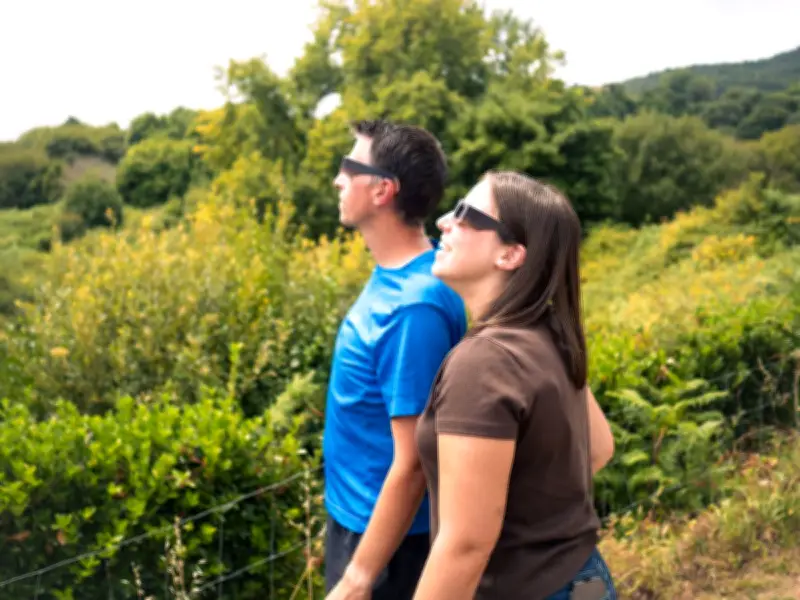
The ROG stresses that you should never look directly at the Sun, even during an eclipse, as it can severely damage your eyes. Eclipse glasses are essential and must carry the safety certification 'ISO 12312-2' or 'ISO 12312-2:2015'.
The organisation warns: "Be careful if you're planning on reusing an old pair of eclipse glasses: these may not be safe, especially if the lenses are creased or scratched, as their filtering properties may have been compromised. Don't take risks – buy yourself a fresh pair."
For a safer alternative, the ROG will livestream the event, and solar telescopes or homemade pinhole projectors are also viable options.