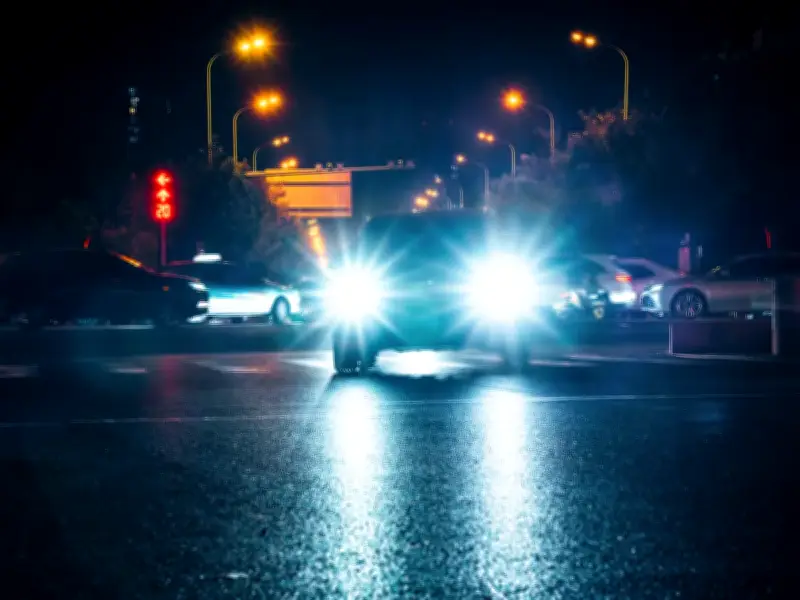
The Department for Transport is set to introduce new laws within two years to address the problem of drivers being dazzled by LED headlights, following the death of BBC presenter Dame Jenni Murray after a crash in which she was blinded by headlights.
Dame Jenni, 75, died on March 12 after a collision in north London on March 4 2026, an inquest heard on Thursday. She was best known as the voice of BBC Radio 4's Woman's Hour, having hosted the programme for three decades and becoming its longest-serving presenter.
Inquest details and police investigation
Dr Clare Morkane, a consultant at the Royal Free Hospital where Dame Jenni died after being admitted on March 4, said: "Jennifer had been driving when she became dazzled by vehicle lights and collided with two stationary vehicles. Following the collision, Jennifer was unable to recall events, exited the vehicle independently and she was conveyed to hospital."

The Metropolitan Police investigated the crash but closed its investigation with no further action.
RAC survey highlights growing concern
RAC senior policy officer Rod Dennis said: "This tragic case underlines once again the need to do something about headlight dazzle, a problem we know so many drivers feel strongly about. While work is ongoing to find ways of reducing headlight glare from new vehicles sold in the future, the problem drivers experience from vehicles already on our roads mustn't be forgotten. This is especially important given more than half of drivers affected by glare who we surveyed this year said the problem had worsened over the previous 12 months, while a quarter said they either drive less at night or have stopped driving at night altogether.
"We understand the Government is due to begin its second phase of research into headlight dazzle later this year. We very much hope it delivers answers that lead to meaningful improvements for all road users."
A new RAC survey found that four out of five drivers (82%) are concerned about being dazzled by vehicle headlights as evenings become darker earlier.
TRL study findings and government response
A study by TRL, commissioned by the DfT, found that 97% of people surveyed said they were regularly or sometimes distracted by oncoming vehicles, and 96% thought most or some headlights were too bright. Of those surveyed, 33% said they had either stopped driving or are driving less at night because of lights, while another 22% said they would like to drive less at night but have no choice. A total of 1,850 drivers, matched to the age and gender split of the country's licence-holding population, were surveyed.
Dr Shaun Helman, who led the research, said the findings provide "compelling evidence" that lights' glare is a "genuine issue for UK drivers".
Parliamentary Under-Secretary of State for Transport Simon Lightwood said in a debate: "We know that lots of people raise concerns about headlamp glare, and we are told that some drivers, as has been mentioned, choose not to drive at night because of its effects. While police collision statistics do not indicate an increase in collisions caused by headlamp glare, the issue can lead to social isolation, which impacts on people's wellbeing and their ability to undertake everyday tasks."
Initial results from the research indicated that SUVs are more responsible for glare than other vehicles due to them being higher on the road. Lightwood said: "As might be expected, the results indicated that road geometry, in combination with brightness, is a key factor in glare events. The second most important factor, however, was identified to be vehicle type, suggesting that certain vehicle characteristics may be contributing to problems of glare. Given the findings of this innovative and groundbreaking research, the Department plans further research examining a range of vehicle makes and models, aimed at identifying what vehicle design factors may be responsible for increased glare. That can then be used to generate proposals for amendments to the international vehicle lighting regulations at the United Nations."

Key LED lighting changes
- New requirements taking effect in September 2027 for mandatory automatic headlamp levelling
- Crackdown on the sale of illegal retrofit headlamp bulbs with £1,000 fines
- Amendments for international vehicle lighting regulations planned
Lightwood added: "It is important that we are evidence-led, hence the commissioning of further research to drill down on the cause and effect. In parallel, the Driver and Vehicle Standards Agency, which leads for the Department on market surveillance of vehicles and automotive components, has stepped up its activities to intercept the sale of illegal retrofit headlamp bulbs for on-road use, which we believe is one of the contributing factors. Anyone caught could face a fine of £1,000.
"The Department is also an active member of the Euro NCAP consumer information programme, which assesses a range of vehicle characteristics to determine a vehicle's safety rating. Work is under way to develop a new vision protocol for 2029, which is planned to include an assessment of vehicle lighting systems to ensure that they provide forward vision while minimising the risk of dazzle for some road users."