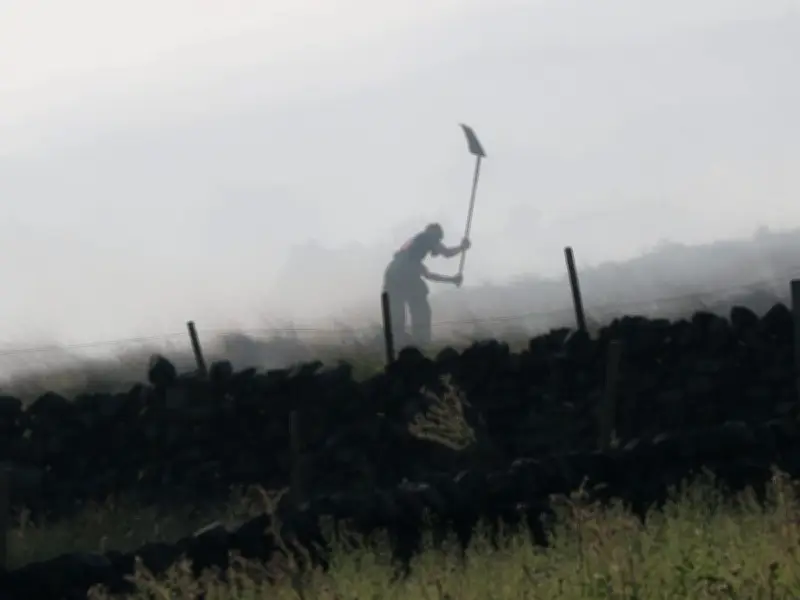
A major incident declared in response to a huge wildfire on the moors above Glossop has been stood down after 23 days.
Firefighters have spent almost six weeks battling the blaze on Tintwistle Moor after it broke out on June 24. Due to its size and the heatwave, a major incident was declared on July 12.
Analysis by the BBC revealed almost 1,500 acres of moorland - the equivalent of 900 football pitches - had been burned. But Derbyshire Fire and Rescue Service has now announced that as of 2pm today (Monday) the major incident was stood down.
Significant progress
It came after 'significant progress' was made in bringing the blaze under control. But firefighters remain on the scene.
The service said: "This remains an active incident and work continues across the moor. The fire remains contained and, encouragingly, no flames have been observed since last week."
Difficult conditions
Huge plumes of smoke could be seen across Greater Manchester when the fire first broke out. As a heatwave hit the UK, firefighters faced extremely difficult conditions while trying to bring the blaze under control.
DFRS added: "We are now nearing the end of the response phase of this incident and will soon move into the monitoring and recovery phase. While this is a positive step forward, it is likely that our presence on the moors will continue for some time as we work to safely remove a significant amount of equipment from the area and support ongoing recovery efforts."
Roads and other fires
Woodhead Pass, which had been closed for almost a fortnight after the fire broke out, remains open, but temporary traffic lights are in place.
Greater Manchester Fire and Rescue Service has been approached for an update on a second ongoing moor fire at Dovestone in Oldham. On Friday GMFRS said the operation was in a 'prolonged containment phase' but 'remained a major incident'.
A statement said: "Although visible fire activity has reduced in many areas, this remains a major incident. Firefighters are continuing to manage hotspots, maintain defensive containment lines and reduce the risk of further spread across challenging moorland terrain."
Recent weather has not brought enough sustained rainfall to significantly change the operational picture. While fewer hotspots are now being identified, significant heat remains beneath the surface and conditions continue to require a substantial multi-agency response.