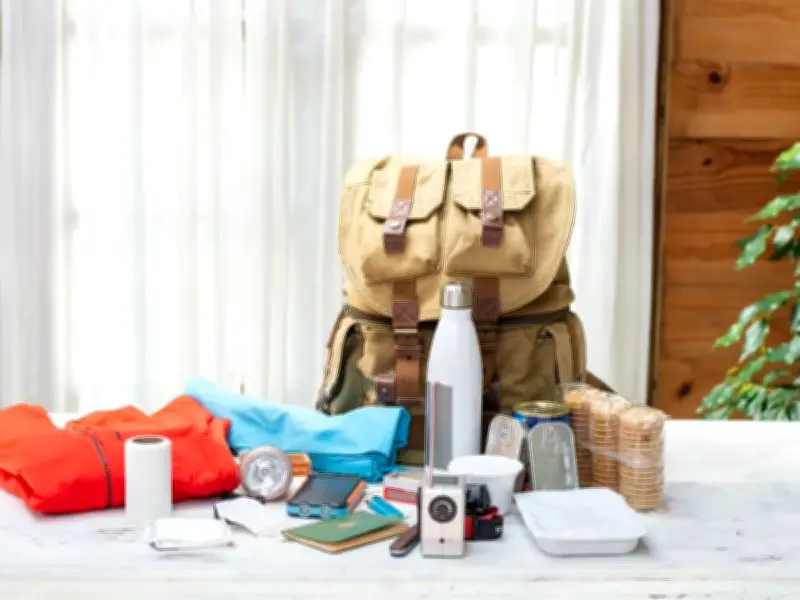
A prepping expert has warned that the standard 72-hour emergency kit advised by the Government is not enough to protect families during real-world emergencies such as floods, blackouts or attacks on the UK.
Defence Secretary Wes Streeting has urged people in the UK to stockpile tinned food, bottled water and cash in preparation for potential war or natural disaster. Mr Streeting described the request as "just a simple ask" of Britons.
He said: "Do they have what they need indoors, should they lose access to their online banking for a period? Should they have a power cut? If there was a risk of wildfire, if there was a risk of flooding, sometimes it feels like even in communities that experience those sorts of events periodically, we're not as prepared as we should be."
Government advice on basic supplies
Mr Streeting said Britons should keep routine items on hand as the UK is now at a "greater risk of war" than any other point in his lifetime.
"It's having some cash at home, having a supply of bottled water indoors, having some tinned goods that you can access if your electric goes and you're not able to cook on the hob or in the microwave," he said. "These are basic things, and of course, you know, a lot of people just have that in their cupboard naturally."
Last month, the Cabinet Office was urged to speed up planning for Britain's home defence programme. The former Health Secretary said individuals should think about how they might prepare for "acts of nature, acts of terror, or indeed in extreme acts of war."
Expert warns of longer disruptions
Marcus Clarke, Founder of The Prepared Household, warned that the standard 72-hour emergency kit leaves millions of families vulnerable when real-world power outages and supply disruptions extend beyond three days. While most household kits are designed strictly around the conventional three-day rule, Clarke said that severe weather, grid failures, and infrastructure delays routinely stretch emergency situations far past this short window, turning temporary inconveniences into prolonged crises.
"The standard three day rule for emergency kits is a good starting point, but it is fundamentally insufficient for the realities we face today," Clarke said, noting that relying solely on a basic box of supplies leaves householders in a precarious position.
The primary shortfall in most kits begins with water storage. While families often pack a few plastic bottles and consider themselves covered, an adult requires at least two litres of drinking water daily, plus additional supplies for basic sanitation. Over an extended outage, relying exclusively on bottled water becomes impractical due to severe weight and storage constraints. Clarke advises incorporating sustainable purification tools, such as high quality water filters or purification tablets, to secure an ongoing clean supply.
Energy, food, and psychological resilience
Energy supply represents another critical oversight. Standard kits usually include a basic torch or wind-up radio, but rarely account for powering essential communication devices or medical equipment during multi-day blackouts.
"When the grid goes down, your mobile phone becomes a brick without a dedicated charging solution," Clarke warns. He stresses that solar chargers, heavy duty power banks, or small portable generators are essential for maintaining contact with emergency services and staying informed when traditional power sources remain unavailable.
Food supplies also require careful reassessment beyond the initial 72 hour mark. While tinned food or basic energy bars suffice for a day or two, extended reliance on them leads to severe diet fatigue and nutritional deficits. Clarke recommends stocking calorie-dense, long shelf life options that require minimal preparation and water, such as freeze-dried meals or hardtack biscuits, to sustain both physical energy and morale.
Beyond physical needs, Clarke emphasises that psychological resilience is an often overlooked aspect of domestic preparedness. Extended periods without lighting, internet, or normal routines create immense psychological strain, particularly for young children. "Being prepared is not just about physical survival; it is about maintaining psychological resilience," Clarke said, recommending that families pack simple distractions like playing cards, books, or a journal to provide comfort and routine during prolonged disruptions.
"True preparedness means thinking beyond the immediate crisis," Clarke concludes. "Your emergency kit should be a living system, evolving with your family needs and the potential threats you face. It is about empowering yourself to not just survive, but to cope and recover effectively, no matter how long the challenge lasts."
Basic kit essentials
Everything you might need to stockpile in a basic kit:
- A battery or wind-up torch - torches are safer than candles.
- A portable power bank for charging your mobile phone.
- A battery or wind-up radio to receive updates during a power outage - a car radio can be utilised, however, in severe weather it might be safer to stay indoors.
- Spare batteries for torches and radios and a backup battery for any medical equipment you depend on.
- A first aid kit (or some first aid supplies) including items such as waterproof plasters, bandages, a thermometer, antiseptic, eyewash solution, sterile dressings and gloves, medical tape for dressings, and tweezers.
- Hand sanitiser and wet wipes for hygiene purposes when the water supply is disrupted.
- Bottled water - there is no standard quantity for this as emergencies can vary in duration and people consume different amounts. The World Health Organisation recommends a minimum of 2.5-3 litres of drinking water per person per day for survival. 10 litres per person per day will make you more comfortable by also providing for basic cooking and hygiene needs. Additional water might be required for preparing baby formula, for medical devices, and for pets.
- Non-perishable food that doesn't require cooking, like ready-to-eat tinned meat, fruit or vegetables (and a tin opener). As with water, the quantity you need will depend on your personal circumstances.
- Don't overlook food for pets.
- Baby essentials such as nappies and baby formula - ready made or ready-to-feed formula is ideal as you may not have the ability to boil water or sterilise bottles.