The UK Civil Aviation Authority has warned that summer flights could be delayed by wrongly packed electrical gadgets such as vapes and power banks. With over 550,000 people expected to fly on the busiest day of the year, the regulator says some 30 million passengers will leave the UK in July and August, taking millions of rechargeable gadgets with them.
Power banks must not be placed in checked-in luggage stowed in the aircraft hold, the CAA says. Instead, they must be taken into the cabin as hand luggage so that something can be done if they start to overheat. Incorrectly packed lithium batteries have already been causing delays and cancellations due to bags having to be off-loaded. If a fire breaks out onboard, flights may have to be rerouted or evacuated.
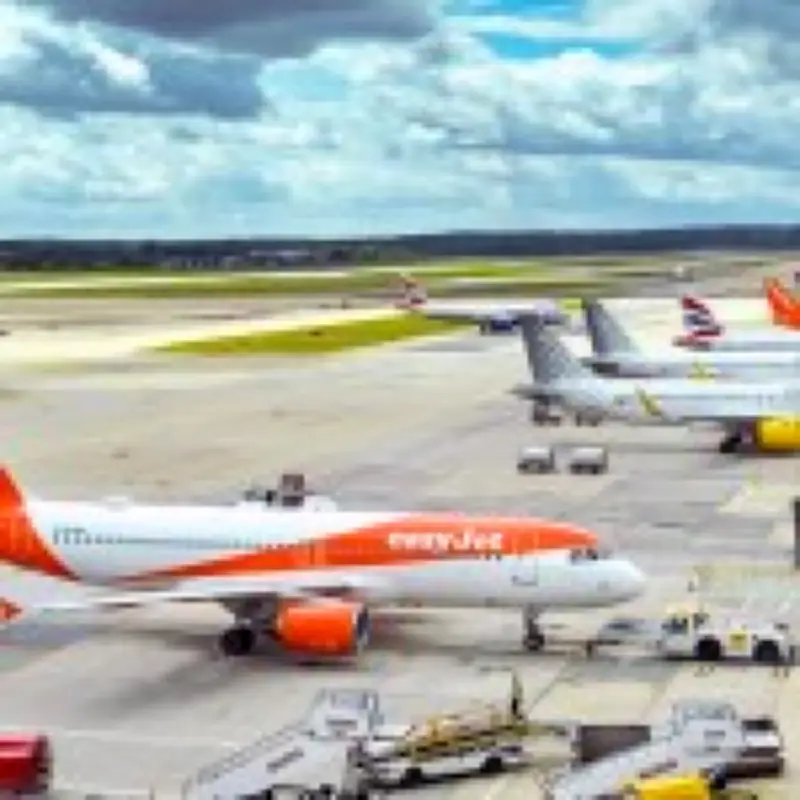
Earlier this year, an easyJet flight was forced to divert after a passenger left their charging bank inside their suitcase. The EZY2618 flight from Hurghada, Egypt, was due to land in London Luton but changed course and touched down in Rome, Italy. An easyJet spokesperson said: 'The safety of its customers and crew is easyJet’s highest priority and easyJet operates its fleet of aircraft in strict compliance with all manufacturers’ guidelines. We are sorry for any inconvenience caused by the diversion and subsequent delay.'
Several airlines, including Singapore Airlines, American Airlines, Lufthansa, and Emirates, have been cracking down on the use of portable chargers on planes — either banning them altogether or limiting them per passenger.
EasyJet
Power banks that do not exceed 160Wh are allowed on board EasyJet flights. They must be kept in cabin baggage and cannot go in the hold. However, you cannot use them during your flight, and they must be 'individually protected'. EasyJet recommends placing them in the packaging they came in, or in a plastic bag. Ideally, store them where you can see them. Power banks are limited to two per customer.
- Cabin Baggage? Yes.
- Checked luggage? No.
- Used on board? No.
Ryanair
Passengers may carry up to 15 personal electronic devices on board, including smartphones, tablets, laptops, and cameras. You can also carry up to 20 spare lithium batteries or power banks, as long as they do not exceed 100Wh each. They must be in your small cabin baggage, placed under the seat in front of you. You can use them on board, but not to charge devices during taxi, take-off, or landing. Power banks should be individually wrapped.
- Cabin Baggage? Yes.
- Checked luggage? No.
- Used on board? Yes.
Wizz Air
Each person is limited to a maximum of 20 spare batteries, including maximum one power bank. They cannot be used on the flight, and power banks exceeding 100Wh are forbidden. Power banks must stay in your hand luggage: 'Don’t put spare batteries in your checked-in baggage!' The chargers cannot be placed in overhead compartments; they 'should be carried where they can be monitored i.e. on the person'. Devices need to be individually protected to avoid short circuits.
- Cabin Baggage? Yes.
- Checked luggage? No.
- Used on board? No.
Jet2
Travellers are limited to two power banks each, and they cannot exceed 160Wh. They must be carried in hand luggage placed under the seat. Power banks 'should not be used in-flight' and 'must not be used to charge or power any portable electronic devices during taxi, take off, and landing.'
- Cabin Baggage? Yes.
- Checked luggage? No.
- Used on board? No.
British Airways
Power banks are 'forbidden' in checked baggage and must be carried in hand luggage. On board, they need to go in a bag under the seat in front of you, or in your seat pocket. They must be 'individually protected'. If your cabin bag is checked in or removed at the gate and placed in the hold, you must remove your power banks and carry them with you onto the plane. There is a two power bank limit, each must display the Wh rating and cannot exceed 100Wh. You cannot charge your power bank on board using the plane's outlets; only personal devices can be charged.
- Cabin Baggage? Yes.
- Checked luggage? No.
- Used on board? Yes.
Virgin Atlantic
You can take five power banks on board, under 100Wh. They must be in your hand luggage, and you cannot use them at any time on board — whether to charge the power bank itself or to top up other devices. This also means you cannot use the in-seat power supply. Power banks must be 'in good condition with no signs of damage' and need to be able to fit into the onboard Fire Containment Bag in an emergency — measurements must not exceed 37 × 28 × 10cm. They also need to be individually packed to avoid short circuits. They cannot be placed in the overhead locker and must be accessible throughout the flight.
- Cabin Baggage? Yes.
- Checked luggage? No.
- Used on board? No.
Lufthansa
Lufthansa became the first European airline to ban the use of power banks on board its aircraft in January. Passengers are prohibited from charging electronic devices from a power bank during a flight, including charging the power bank itself from the aircraft's electrical power supply. Power banks may not be placed in overhead lockers; they must be kept on the passenger's person or stowed in the seat pocket or in carry-on baggage under the seat in front. Power banks remain prohibited in checked baggage. A maximum of two power banks may be brought aboard per passenger, with the maximum battery power permitted being 100Wh.
- Cabin Baggage? Yes.
- Checked luggage? No.
- Used on board? No.
Emirates
After a flight bound for Amsterdam filled with smoke when a power bank ignited, Emirates cracked down on their power bank rules. All Emirates customers may now carry only one power bank onboard, which cannot be used to charge any electronics during the journey, and cannot be charged themselves using the power source from the seat. The charger must be under 100Wh (with the rating clearly visible), and it must go in the seat pocket in front of you, or in your bag under the seat.
- Cabin Baggage? Yes.
- Checked luggage? No.
- Used on board? No.