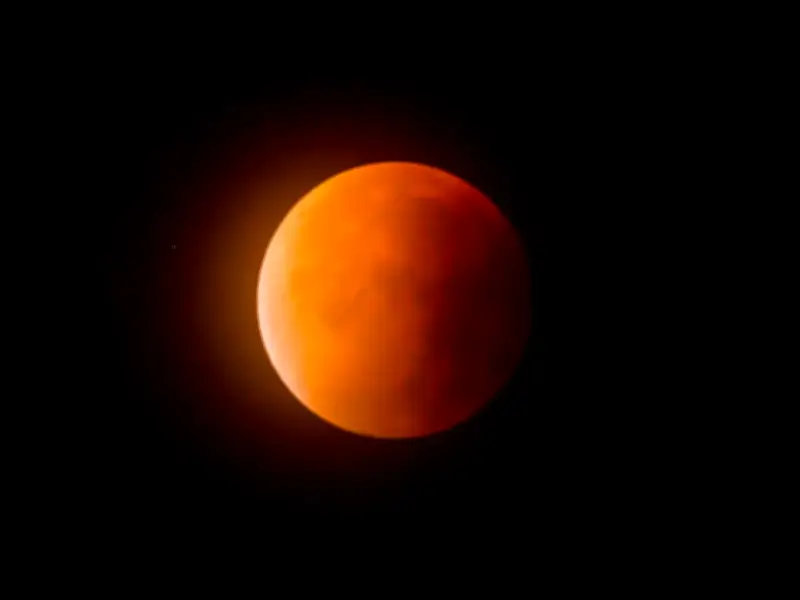
Skywatchers in the UK are in for another celestial treat this month, as a partial lunar eclipse is set to be visible on Friday, August 28. The event follows a rare partial solar eclipse that was seen across the country on Wednesday, August 12, when the Moon covered over 90% of the Sun, creating a dramatic crescent shape and dimming the daylight.
Timings for the lunar eclipse
The partial lunar eclipse will begin at 3.33am, with the Moon gradually moving into Earth's shadow. The maximum eclipse will occur at 5.12am, when only a very small section of the Moon will be covered by the umbra, the darkest part of Earth's shadow. The eclipse will no longer be visible by around 6.15am, as the Moon sets.
As the eclipse progresses, the Moon will be increasingly low on the horizon. Royal Museums Greenwich advises that to get the best view, observers should find a high point with a clear view to the southwest.
What causes a lunar eclipse
According to Royal Museums Greenwich, a lunar eclipse occurs when the Earth lies directly between the Sun and the Moon, placing the Moon in Earth's shadow. During a total lunar eclipse, the Moon turns a deep, dark red because it is illuminated by light that has passed through Earth's atmosphere. A partial lunar eclipse happens when only a section of the Moon passes through the umbra, while the rest remains in the penumbra, the outer region of Earth's shadow.
Lunar eclipses occur between two and five times a year, with a total lunar eclipse happening at least twice every three years. The last total lunar eclipse occurred on September 7, 2025, and the most recent partial lunar eclipse was visible on March 14, 2025. The next partial solar eclipse may not occur until 2050.