Flash floods and mudslides triggered by an earthquake have killed 97 people in Nepal, with 384 others still missing, including a British national. Rescue teams are continuing dramatic search and rescue operations across the disaster zone, which also affects parts of neighbouring China.
Rescue efforts and casualties
Authorities reported on Thursday morning (August 27) that 97 people had died in the floods and landslides. Nepali Army officials fear another 384 people remain unaccounted for.
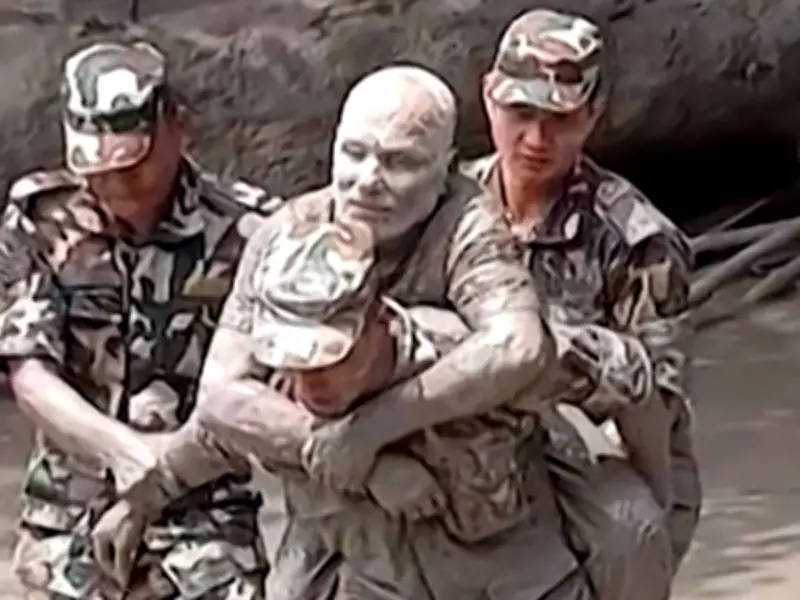
Footage released by the military shows soldiers carrying a mud-covered man from a landslide to safety on their backs, while others trudge through thick mud to deliver stretchers to casualties. A spokesperson confirmed that 54 people have been saved in the disaster zone, spanning both Nepal and China.

Cause of the disaster
The flash floods were sparked by an earthquake along the two nations' border. Records indicate a 4.4 magnitude tremor hit near Kodari at 8:37am local time (3:52am in the UK) on Wednesday (August 26).
This triggered an avalanche in the Himalayas that "eventually caused the collapse of glacial lakes in the Tibet region of China", explained Nepal foreign minister Sishir Khanal. He added: "Equipped with helicopters, drones and rafting boards, rescuers from all state forces - Nepal Police, Armed Police and Nepal Army - were deployed to the flood-hit area."
Extent of destruction and international response
Those missing hail from the UK, Australia, the Netherlands, Nepal, India, and South Africa. The destruction in Nepal is extensive, with at least 19 bridges and 200 lorries washed away, and 25 miles of road and 13 hydroelectric projects also suffering damage.
In China, the number of fatalities, injuries, or missing persons remains uncertain. State-controlled media has reported a mudslide near Gyirong Port, stating: "The disaster has cut off roads leading to the port on the Chinese side, as well as communications and power supplies."
Chinese President Xi Jinping has commanded "all-out efforts" to locate survivors, and also demanded an evacuation and medical treatment in the impacted area. Indian Prime Minister Narendra Modi has extended humanitarian assistance to neighbouring Nepal, stating on X: "Our teams are coordinating closely on rescue and relief efforts."