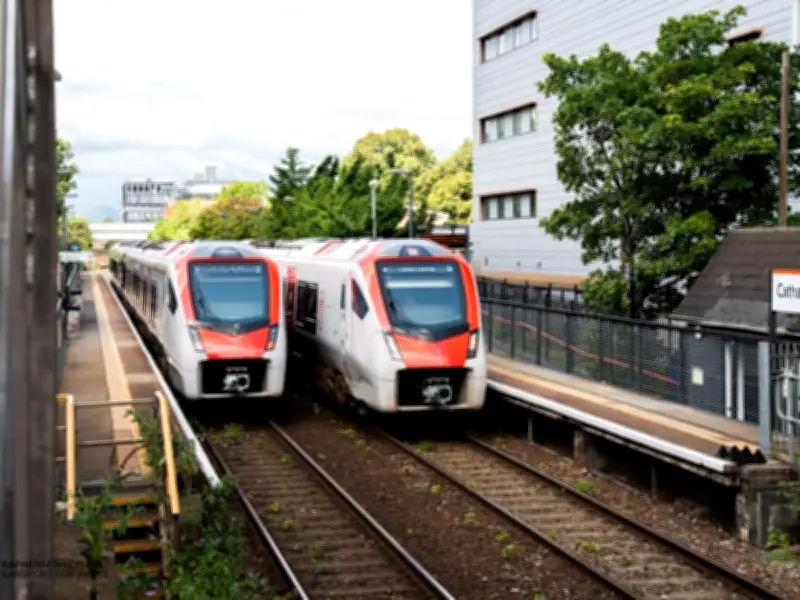
Rail passengers across Wales are facing widespread disruption for a third consecutive day on Friday, as extreme temperatures continue to affect the railway network. Transport for Wales has warned that severe weather is impacting a number of routes across the country, with speed restrictions causing delays and a number of train cancellations as Wales enters its third day of exceptionally hot weather.
Affected Services and Timings
The disruption affects both Welsh routes and cross-border services, with some restrictions expected to remain in force until Saturday. The affected services include:
- Chester – Wrexham General: all trains cancelled until the end of the day
- Shrewsbury – Birmingham International: all trains cancelled until the end of the day
- Wrexham Central – Bidston: services may be cancelled up until 10pm
- Bridgend – Maesteg: all trains cancelled until 11.30pm
- Cardiff Central – Ebbw Vale Town: services may be cancelled until 11.30pm
- Machynlleth: services may be cancelled
- Llandudno – Blaenau Ffestiniog: all trains cancelled until the end of the day
- Pontypridd – Cardiff Bay: all trains cancelled until the end of the day
- Manchester Piccadilly – Cardiff Central: services may be cancelled
- Coryton – Penarth: all trains cancelled until 8pm on Saturday
Safety Measures and Apology
The restrictions have been introduced because of severe weather conditions, in the interest of public safety. Transport for Wales has apologised for the disruption and urges passengers to check before travelling, as delays and cancellations to services are expected throughout the day. Disruption is expected to continue until the times stated for each route, with engineers monitoring conditions across the network.
Impact of Heat on Railway Infrastructure
According to Network Rail, hot weather can be “as challenging as freezing winters”. Hot weather can affect the rails, overhead power lines and the ground on which the track sits. In hot weather, the overhead lines can expand and sag, which means temporary speed restrictions have to be imposed to reduce forces on the track. The restrictions are designed to reduce the risk of tracks buckling, where steel rails expand and become distorted in extreme heat.