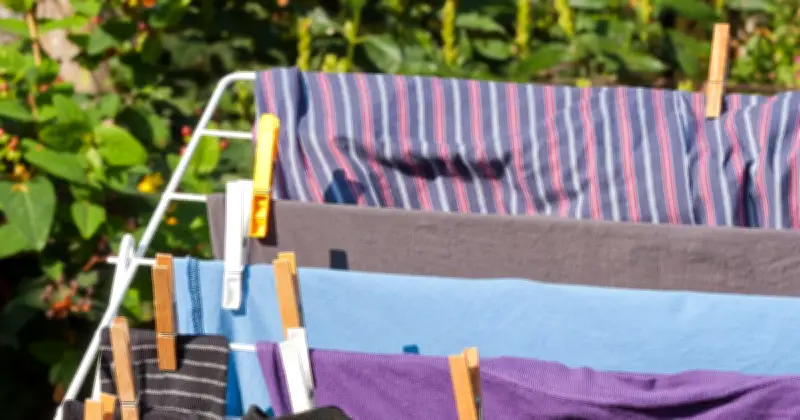
Households are being urged not to dry clothes inside their homes this winter due to the potential health risks it can create. The warning comes as heavy snow and freezing conditions have made it difficult to carry out essential household tasks like drying clothes because the washing line is firmly off-limits.
With the wintry weather comes the annual battle to try to dry clothes indoors when they cannot be put outside. Home insurance experts at Quotezone.co.uk are urging homeowners to avoid hanging their laundry inside to dry as it can lead to mould issues in the house.
Millions affected by mould and damp
This comes after research revealed over two million Brits are struggling with significant mould or damp in their homes, costing the NHS an estimated £1.4 billion per year to treat mould-related illnesses.
Hanging damp clothes on a drying rack inside the home releases moisture into the air which promotes mould growth. Drying laundry on radiators or heated racks is also a common practice for many households in the colder months. The experts warn this common mistake is even riskier as it creates indoor pollution and triggers condensation.
Health risks and costly damage
Inhaling mould spores poses serious health risks, including eye and skin irritations, respiratory infections, nasal congestions and coughs. While some households are reluctant to use a tumble dryer because of its high running costs, it can be much more expensive to tackle mould once it has started germinating in the house.
Mould spreads rapidly and if left unchecked, it can cause extensive damage to walls and other structures, with mould removal costs potentially reaching over £3,000. Putting clothes on radiators and even using heated airers can cause problems in the winter.
Expert advice on safer drying methods
Instead, experts say you should put clothes on an extra spin cycle in the washing machine and use a dehumidifier to dry clothes. Even better, try opening a window briefly to help air out a room and stop moisture from getting trapped.
Greg Wilson, savings expert and CEO of Quotezone.co.uk, said: “Hanging damp clothes on air dryers, radiators or heated drying racks during autumn and winter months may seem like a logical solution, but many are unaware of the hidden dangers.
“When clothes are air-dried inside, moisture gets trapped in the home, leading to increased humidity which is a breeding ground for mould.
“Mould spores are hazardous to health, particularly for vulnerable groups such as children, the elderly and those with existing respiratory issues.
“Prolonged exposure to mould can seriously affect the airways and lungs, as well as cause eye and skin irritations.
“Besides the health hazards, mould can also be very costly to remove and can cause extensive damage to your home’s structure, including walls, ceilings and floors - leading to repair costs that can run into the thousands.
“If people need to make a claim on their home insurance due to mould or damp, the insurer is unlikely to cover them if the property is not well maintained or is damaged due to a lack of care.
“To prevent mould from creating havoc in your home, it’s important to be mindful of your drying methods in autumn and winter.
“Keeping an eye on the weather and using dry days to hang clothes outside is ideal, even in colder months.
“Using an extra spin cycle on your washing machine and investing in a dehumidifier or drying pod can help reduce the moisture inside your home if drying outside is not an option.
“Ventilation is key, open windows for fresh air and be on the lookout for early warning signs of mould.”