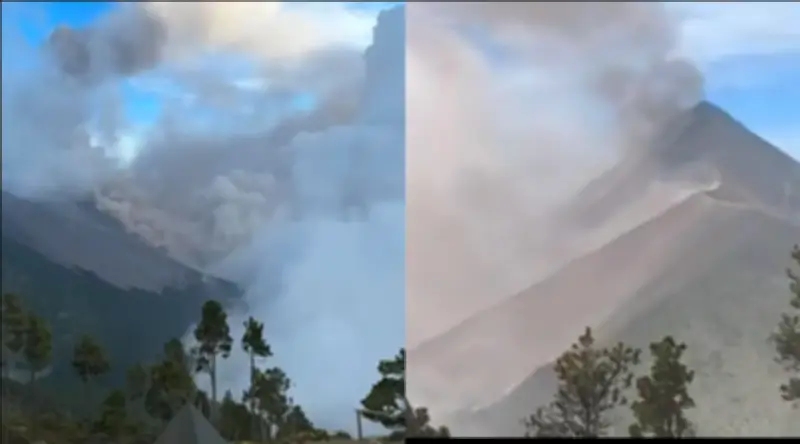
Guatemala has declared a nationwide orange danger alert after Volcán de Fuego, one of Central America's most active volcanoes, erupted, sending lava, ash and smoke into the air and forcing residents in nearby villages to evacuate.
Eruption Details
Eruptions commenced on Monday morning, escalating throughout the night, with molten lava and massive plumes of ash and smoke billowing into the atmosphere. Authorities responded by issuing the nation's second-highest emergency alert, reports the Mirror.
This led officials to start evacuating residents from what's been designated as the danger zone. In a social media post, Guatemala's disaster agency, Conred, stated: "An orange (danger) alert has been declared nationwide due to the eruption of the Fuego volcano."
Evacuations and Impact
Two communities situated near the volcano's base were evacuated following the eruption. Guatemala is located within the Pacific's notorious "Ring of Fire", a region known for regular seismic and volcanic activity.
Last year approximately 500 residents required evacuation when Fuego began ejecting ash and smoke into the sky. The government was forced to suspend school activities and close a road connecting the volcano to the nearby city of Antigua.
Historical Context
An eruption in 2023 resulted in roughly 1,200 people being evacuated from the vicinity. The volcano has experienced nine significant eruptions since 2015 alone.
Fuego is renowned for its near-constant activity. While the intensity is typically fairly low, it's believed to emit ash and smoke alongside experiencing low-level explosions approximately every 15 to 20 minutes.
About the Volcano
Its name, Volcán de Fuego, translates from Spanish as "volcano of fire". Fuego is situated in the Sierra Madre mountain range in Central America, roughly 16km west of Antigua.
The city, which served as Guatemala's capital until 1773, is home to approximately 60,000 residents. It's a favoured hiking spot thanks to the nearby volcanoes Fuego and Pacaya.
Constructed at approximately 1,500m above sea level, Antigua was designated a UNESCO World Heritage Site in 1979. Significant portions of the city were damaged by an earthquake in 1773, though they've been preserved as ruins.