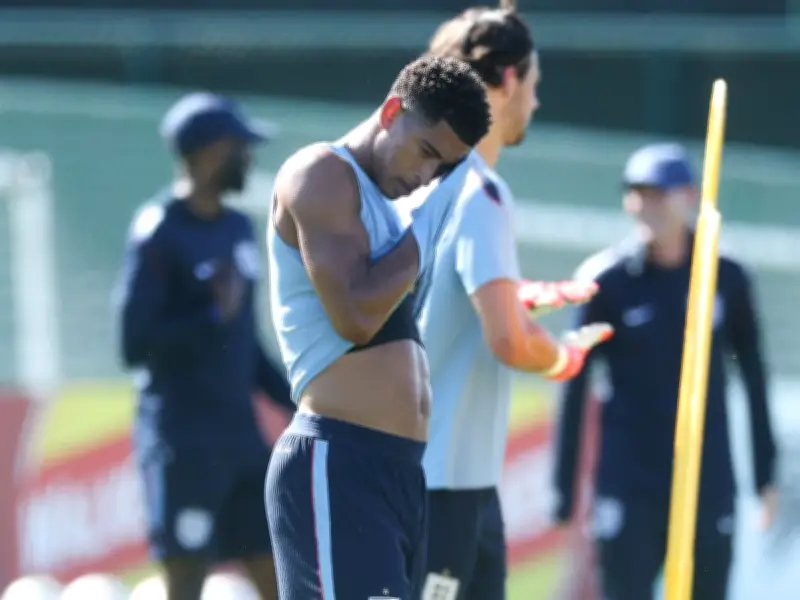
England are braced for another brutal test in extreme heat when they face Norway in the blistering conditions of Miami, where players can lose the equivalent of eight pints of sweat. Thomas Tuchel's side will battle for a place in the semi-finals to set up a meeting with either Argentina or Switzerland.
Heat Advisory and Saharan Dust
The US National Weather Service has issued a heat advisory ahead of the game, warning that the combination of temperature and humidity could push the real-feel figure to a suffocating 43 degrees Celsius. Adding to the challenge, a plume of Saharan dust drifted across the Atlantic earlier in the week and has prompted health alerts, particularly for anyone with allergies or respiratory issues.
The Three Lions have already been tested at altitude, having battled past Mexico 3-2 in boiling temperatures at the Azteca Stadium and 7,350 feet above sea level. Miami offers lower ground, but not kinder weather.
Physiological Impact on Players
If the quarter-final goes to extra time, LadBible notes that players could lose around two litres per hour, meaning 120 minutes amounts to roughly four litres, or eight-and-a-half pints. Speaking to the outlet, Dr Foster, a lecturer in Environmental Physiology at King's College London, explained: "At the kind of workloads expected in elite outfield football players, it is impossible to consume enough fluid to fully prevent the impact of high heat and humidity. This will start to manifest in a reduced performance as the match progresses."
"At the start of the match, their deep body temperature will be 37.5 to 38C. Toward the end of the match, this will likely approach 39.5-40C in those who work the hardest. Getting to such a high temperature rapidly increases the perception of fatigue, as your body is desperately trying to stop you from exercising and therefore producing heat."
Dr Foster continued: "Heart rate will increase by about 20-40 beats per minute, and water loss through sweating will be very high, approaching two litres per hour. Your muscle temperature will be higher, meaning they will consume energy stores faster. High humidity also accelerates dehydration, which ultimately means your heart has to work much harder to keep blood pressure stable. Competing at a higher heart rate makes the exercise feel harder, causing an earlier onset of fatigue and ultimately an impaired performance."
"Furthermore, we lose electrolytes in sweat, such as sodium, potassium, and chloride. These electrolytes are critical for nerve function, so if we lose them, we also lose muscular performance and accelerate the sensations of fatigue in the brain."
Cooling Strategies
Though hydration breaks remain unpopular with some fans, they provide essential protection for players in extreme temperatures. "We need to use this time to aggressively cool the player so we can get their body temperature to return to normal levels," Dr Foster added. "The players could also ingest ice slurry drinks instead of cold water alone, as this will cool the body 5-10 times faster."
Match Details and Kit
The match will kick off at 10pm UK time, assuming the threat of thunderstorms tonight does not delay matters, with the Three Lions returning to their traditional all-white strip. They were forced into navy shorts against Mexico in the previous round due to FIFA's Equipment Regulations, which state under Rule 6.2.1 that each item of one team's kit must contrast clearly with the equivalent item worn by the opposition.