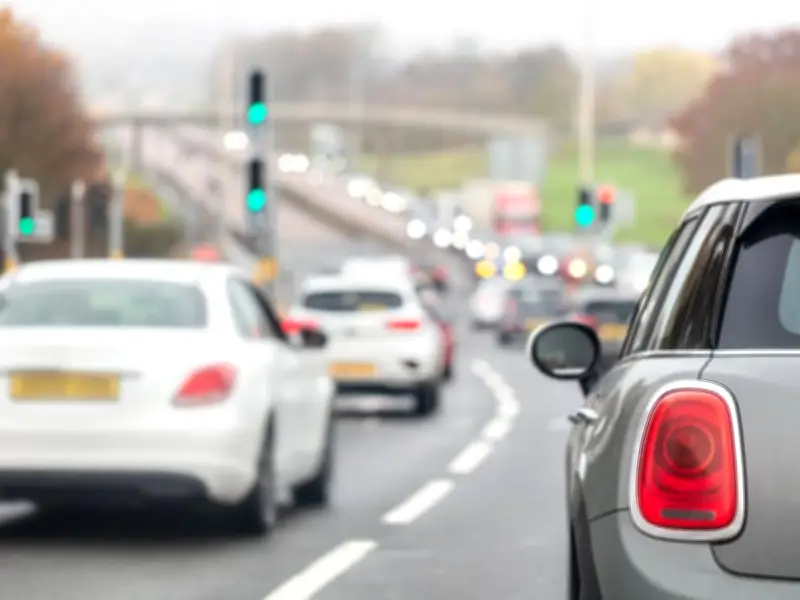
Motorists who flash their headlights as a courtesy or to warn others of speed cameras could be hit with a fine of up to £1,000. The seemingly harmless gesture is in breach of the Highway Code and can be treated as obstructing the police.
Why headlight flashing is against the rules
Many drivers flash their headlights to say "thank you" when they have been let out, given right of way, or shown patience. However, motoring experts warn that this gesture is a violation of the Highway Code.
Kwik Fit said: "When driving in low-visibility conditions (such as fog or at night), some drivers choose to flash their headlights as a 'thank you'. While this seems harmless, flashing headlights can be a distraction, confusing other drivers and doing more harm than good."
"Because of this, the Highway Code stipulates that you should only use your headlights 'to let other road users know that you are there. Do not flash your headlights to convey any other message or intimidate other road users'."
How motorists can end up with a fine
Some motorists use their headlights to warn others of speed cameras, a police presence or other potential hazards ahead. Misusing headlights in this way can be regarded as obstructing the police.
Driving school company Drive Johnson's said: "Flashing your headlights can be used to signal to other drivers that there is a speed camera or police ahead. Many drivers are unaware that this helpful gesture can see you facing a fine yourself. Motorists can receive fines of up to £1000 for flashing their headlights to warn other drivers."
Car dealership Dick Lovett added: "If drivers are caught doing this, drivers could face fines of up to £1,000, as legally, this would classify as 'obstructing police duties' under section 89 of the Police Act 1997."
When flashing your headlights is allowed
According to the Highway Code, headlights should only be flashed to make other road users aware of your presence on the road. Use your headlights only to alert oncoming drivers to your whereabouts if you find yourself in a potentially hazardous position or if there is a risk they may not have spotted you.