Doomsday fears have erupted online as three spectacular cosmic events prepare to converge within hours of one another next Wednesday (August 12). This has prompted some sky watchers to brand it the universe's “triple feature”.
Triple Threat or Rare Coincidence?
A rare total solar eclipse, the peak of the Perseid meteor shower, and a six-planet “parade” will all unfold on the same date, sparking wild apocalyptic speculation all over social media. The unusual timing has fuelled a wave of worry, with some claiming the celestial line-up could signal everything from the Rapture to a fictional zombie apocalypse.
“That's literally doomsday,” one user wrote, while another joked: “If y'all hear trumpets, mind your business.” Others quipped that the universe was about to “initiate a soft reboot” and that “astronomy got a season finale”. In reality, astronomers say there is no threat to Earth.
What's Actually Happening
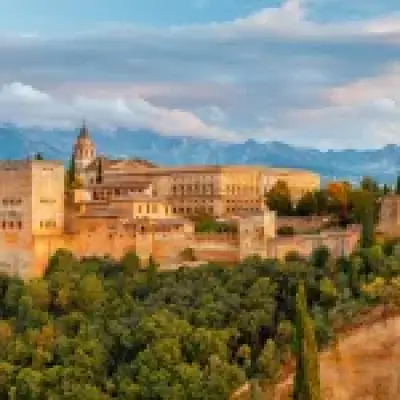
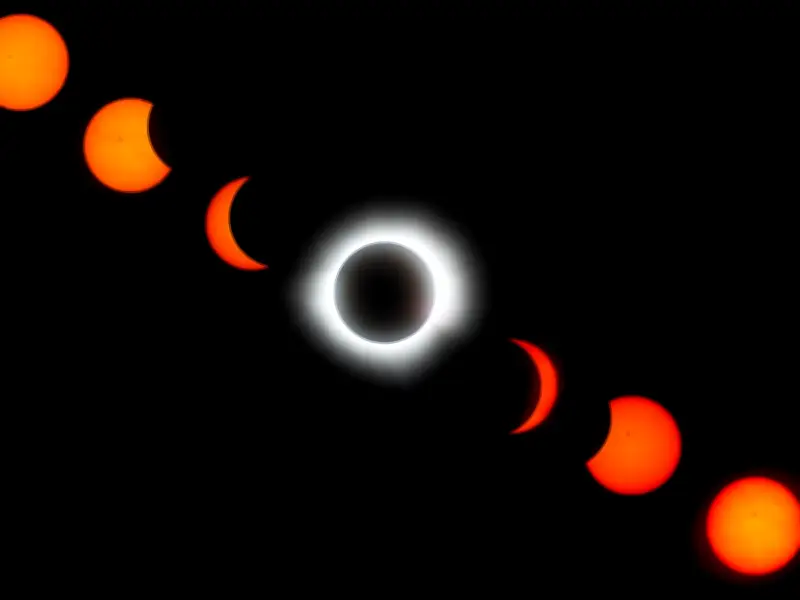
First, a total solar eclipse will sweep across parts of Greenland, Iceland, Spain and Portugal, plunging those areas into temporary daytime darkness - the first total eclipse visible from continental Europe since 1999, Forbes reported. The UK sits just outside the path of totality, meaning we'll get a deep partial eclipse across all four nations, peaking around dusk.
The best UK view is expected in the Isles of Scilly with 96.5% coverage at 7.12pm BST, with Cornwall close behind (95.8%). London hits about 91.4% at 7.13pm, while Shetland sees the least coverage at 87.9% around 7pm, according to Zendar Universe.
Meteors and Planets
Next, once darkness falls (around 9.30pm BST), the Perseid meteor shower should explode overhead in near-perfect, moonless conditions. It will unveil potentially up to 100 “shooting stars” an hour, especially from dark-sky spots like Galloway Forest Park, Exmoor, the Brecon Beacons or Northumberland.
Finally, before sunrise (around 4.30am–5am BST), Mercury, Jupiter, Mars, Uranus, Saturn and Neptune will appear lined up. Four planets will be visible to the naked eye; Uranus and Neptune need binoculars.
Public Viewing Events
Public viewing events are planned nationwide, from Calton Hill in Edinburgh to Beachy Head and County Durham, as per Go Star Gazing.
What's The Perseid meteor shower?
It happens every year in July and August when Earth ploughs into a huge stream of space debris left behind by a giant comet. As our planet “smashes” through that dusty trail, countless tiny fragments hit the upper atmosphere at extreme speed and instantly burn up, creating the blazing streaks of light we call “shooting stars”.
The Perseids are made of leftovers from Comet Swift‑Tuttle - a colossal dirty snowball of ice and rock that swings around the Sun roughly once every 133 years. Each time it passes close to the Sun, heat vapourises some of its ice and sheds millions of grains of dust and small pebbles into space.
Over time, that material spreads out into a vast ring - and every summer Earth's orbit cuts straight through it. They are called “Perseids” because the meteors appear to fan out from the constellation Perseus, named after the hero of Greek mythology.