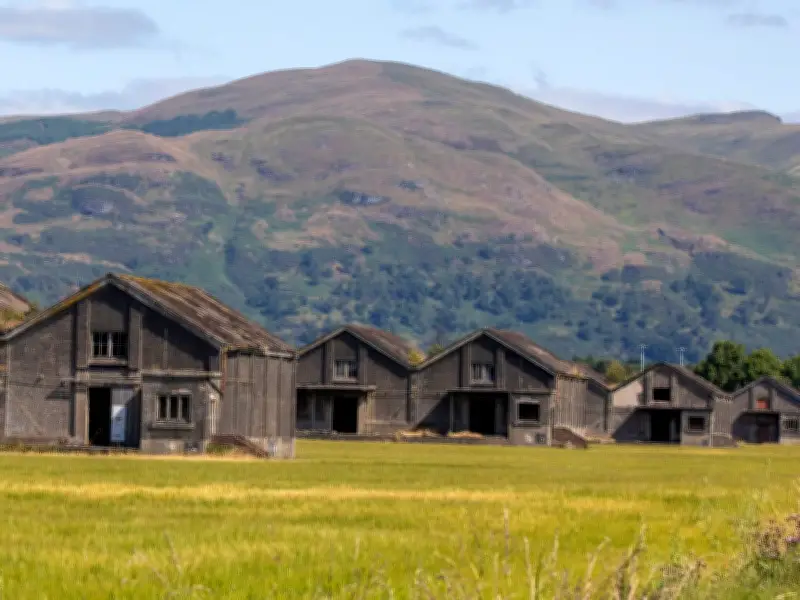
Creepy new photographs reveal the decaying ruins of an abandoned hidden World War One bomb depot in Scotland, nestled along the River Forth near Stirling. The site, part of the run-down Bandeath Munitions Depot, features more than 35 abandoned storage warehouses spaced around 100 metres apart.
The depot was created in 1916 as an Admiralty Depot to store munitions and explosives for the British naval effort in Europe. It also produced mines, shells, and bombs, some weighing up to 800 kilograms.
History of the Depot
Built with labour from the nearby prisoner-of-war camp Polmaise, the stores were arranged in six organised rows. They were spaced apart to prevent a potential blast in one store from triggering a chain reaction. The original protective earth blast walls have since disappeared.
After the First World War, the depot was expanded with an additional seven stores and laboratory buildings to the south. It later became a Royal Naval Armament Depot during World War Two.
Expansion and World War Two
The depot was supplied via a primary railway line connected to its own internal railway. From the warehouses, the railway linked to a rail-mounted crane on a pier, where shells and mines were loaded onto puffers or Victualling Inshore Craft. These vessels carried the munitions out to sea to supply the British navy.
Following the Second World War, many Polish servicemen stationed in Britain chose not to return home due to Soviet control. The depot was used as a resettlement camp for these soldiers, airmen, and their families.
Post-War Use and Decommissioning
During the 1950s and 1960s, the site remained under military ownership until decommissioning in 1978. It was then sold to the Central Regional Council, now Stirling Council, and renamed Bandeath Industrial Estate. Some buildings have been repurposed by local businesses.
The crane still stands on the former pier, now privately owned, and several pillboxes remain on the site. The location remains largely unknown to many in Scotland.
Advice and Remains
Though a reminder of the country's war history, Scots have been advised not to visit the area.