Holidaymakers were thrown into alarm in one of Spain's most visited regions when a 4.1 magnitude earthquake struck Murcia on Sunday morning.
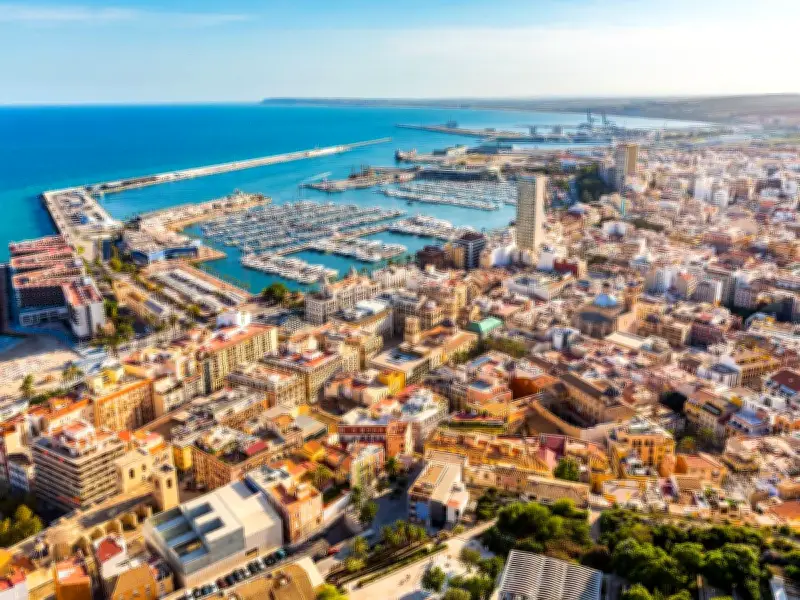
The tremor was recorded by Spain's National Geographic Institute (IGN) at 11.59am, with reports indicating it lasted for several seconds. The seismic event affected Alicante, a favourite destination for British tourists, as well as the nearby resort of Benidorm and the city of Albacete.
Tremors felt across the region
The epicentre was located in the municipality of Librilla, around 3 miles beneath the surface, with Murcia sitting about 18 miles away, according to the Mirror. The quake is slightly less powerful than Friday's 4.7 magnitude tremor in Naples, Italy, which caused structural damage to buildings and vehicles and left roughly 20 people injured.
Emergency services in the region said no harm had been confirmed. The 112 Emergency Coordination Centre for the Region of Murcia wrote on X: "The 112 Emergency Coordination Centre for the Region of Murcia has received more than 80 calls (...) at various points in the region. So far, no personal or material damage has been reported."
Increased seismic activity in recent weeks
IGN confirmed that seven tremors have been recorded in total in recent days, with seismic movement amounting to 21 incidents over the past month. Sunday's event is the most powerful earthquake in the area in six months, surpassing a June 3 quake which registered just 2.3 in magnitude.
The region has a history of stronger earthquakes. Fifteen years ago, a 5.2 magnitude quake struck Lorca in southern Spain in 2011, killing 10 people. Hundreds fled their homes as structures collapsed in the town southwest of Alicante, and a local hospital had to be evacuated while cars were buried under large amounts of rubble.
Geological background
Southern Spain faces a high risk of seismic activity, with Andalusia and Murcia sitting on the northern edge of the convergence zone between the Eurasian and Nubian (African) tectonic plates. That plate boundary is moving northward into Eurasia at around 4–5 mm per year.
This ongoing collision, which in earlier geological periods created the Atlas Mountains of Morocco and the Alps of central Europe, is visible today in southern Spain through the fault networks of the Betic Cordillera. That mountain chain runs from the Gibraltar Arc in the west, through Malaga, Granada, Almeria and Murcia, towards the Mediterranean coast.