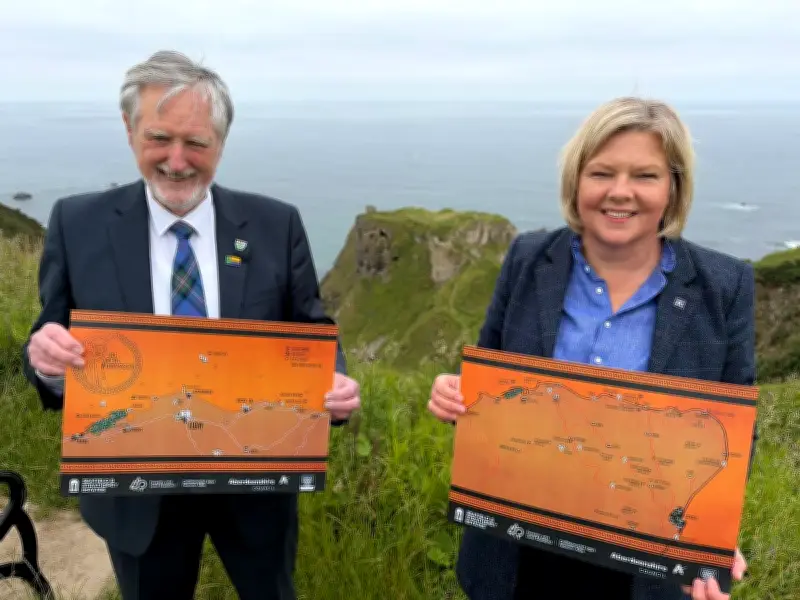
A new map has been created to highlight the Scottish filming locations featured in Christopher Nolan's epic film The Odyssey. Released in cinemas on July 17, 2026, the adaptation of Homer's ancient Greek poem has captivated audiences and critics worldwide.
Filming in Northeast Scotland
The blockbuster was shot across several countries, including picturesque locations in Moray and Aberdeenshire in northeast Scotland. The success of the film has thrust the region into the international spotlight, with an expected influx of tourists eager to see the scenic spots used in the movie.
To help visitors find all the Scottish filming locations, Moray Council, Aberdeenshire Council, Seafield and Strathspey Estates, and Forestry and Land Scotland have collaborated on a new map. According to Moray Council, the map will allow tourists to discover a wealth of attractions in the country.
Key Locations: Findlater Castle and Sunnyside Beach
Among the most notable spots is Findlater Castle in Aberdeenshire, a ruined 13th-century castle perched on sea cliffs overlooking the Moray Firth. It served as a backdrop for scenes involving the island of Aeaea, home to the goddess Circe. Nearby Sunnyside Beach, with its golden sands and rock pools, was used for scenes where Matt Damon's Odysseus and his crew come ashore.
Provost of Aberdeenshire Cllr Judy Whyte said: "The release of The Odyssey marks a truly proud moment for Aberdeenshire and the wider north-east of Scotland. Audiences across the world will now experience the breathtaking beauty of our coastline, with the dramatic cliffs, seascapes and iconic ruins of Findlater Castle taking centre stage."
She added: "When a production of this scale comes to our region, the benefits extend far beyond the silver screen. During filming, local hotels, restaurants, shops, transport providers and a wide range of businesses all see a significant economic boost from the hundreds of cast, crew and support staff."
Culbin Forest and Culbin Sands
Across the Moray coastline, Culbin Forest and Culbin Sands were also used in the adaptation. The area of forest, dunes, and beach was the setting for scenes depicting Odysseus and his crew arriving ashore before venturing inland to battle man-eating giants. Culbin is known for its lost settlements, shifting sands, and mysterious stories dating back to prehistory and World War Two.
Civic Leader of Moray Council Cllr John Cowe commented: "We're absolutely delighted to see Moray featuring in what is undoubtedly one of the most anticipated film releases of the year. Christopher Nolan's The Odyssey will introduce millions of cinema-goers around the world to the spectacular landscapes that make Moray such a special place."
He continued: "The stunning setting of Culbin Forest and Culbin Sands provided the perfect backdrop for this epic story, and we are proud that our coastline helped bring one of literature's greatest adventures to life on the big screen. Moray and the North East's appeal goes far beyond its cinematic credentials. Visitors inspired by the film can discover miles of beautiful coastline, fascinating heritage sites, welcoming communities and an extraordinary history."
More details can be found on the Moray Council website.