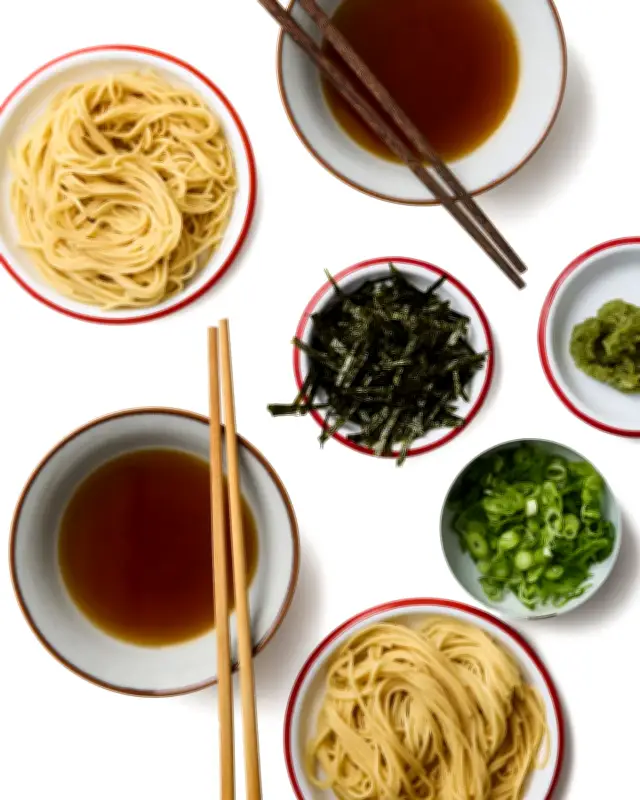
Zaru soba, Japan's cold buckwheat noodle dish served with a savoury dipping sauce, offers a simple and satisfying answer to hot weather cooking. Described by Namiko Hirasawa Chen of Just One Cookbook as her family's "go-to meal when the summer heat and humidity soar," the dish is ready in 15 minutes and can be complemented with crunchy salads, sweet seafood, or creamy tofu sides.
Traditionally served on a bamboo mat (zaru) to allow the noodles to drain, a mat is not essential at home. Omitting the seaweed allows the dish to be called mori soba instead.
Choosing and Preparing the Noodles
While other chilled noodle dishes exist in Japan, such as somen and hiyashi chuka, buckwheat soba is more readily available in UK supermarkets. Yumiko Maehashi of RecipeTin Japan notes that the nutty flavour of soba is best enjoyed cold, citing Japanese soba enthusiasts who would not consider soba in hot soup as 'soba'. She explains that the ratio of buckwheat to wheat flour varies by brand, with more buckwheat providing more flavour and a higher price, and generally cooking to al dente better.

For a gluten-free version, 100% buckwheat noodles and a gluten-free soy sauce are required. The noodles are cooked in unsalted water, with a suggestion to swirl them for the first 15 seconds to prevent clumping. Rinsing them well afterwards cools them quickly and removes excess starch, which would otherwise make them sticky.
Crafting the Dipping Sauce
The dipping sauce, or mentsuyu, is intensely flavoured, combining salty soy sauce, sweet mirin, umami-rich kombu, and dried smoked tuna flakes (katsuobushi). Ready-made dashi stock can substitute for the kombu and katsuobushi, and bottled mentsuyu is also available, though homemade is simple. Some recipes add sake and brown sugar for complexity and sweetness, while shiitake mushrooms can be used as a substitute for tuna flakes for those who do not eat fish.
The sauce should be made in advance and chilled. Infusing the kombu and tuna for several hours extracts maximum flavour, and the solids can be saved to make furikake rice seasoning. Chef Masaki Sugisaki of Dinings SW3 in London suggests heating reserved noodle cooking water and adding it to the remaining sauce after the noodles are finished, as it is traditional to drink this as a soup.
Serving and Accompaniments
Common accompaniments include shredded nori, wasabi, and spring onions. Other options include daikon, garlic chives, grated ginger, and ground toasted sesame seeds. The dish's appeal lies in its simplicity, so it is best to avoid overloading it with toppings.
The recipe serves two and requires 75g bunches of soba noodles, nori, spring onions, and wasabi. The sauce is made from kombu, Japanese soy sauce, mirin, sake (optional), brown sugar, and katsuobushi flakes. The kombu is soaked in cold water for half an hour, then the remaining ingredients are added and brought to a boil. After turning off the heat, the katsuobushi is added, and the sauce is cooled and chilled.
The noodles are cooked in unsalted boiling water until al dente, then rinsed under cold water and drained well. The sauce is strained and served in individual bowls with the noodles and accompaniments. After the noodles are eaten, cooking water is added to the remaining sauce to make a broth.