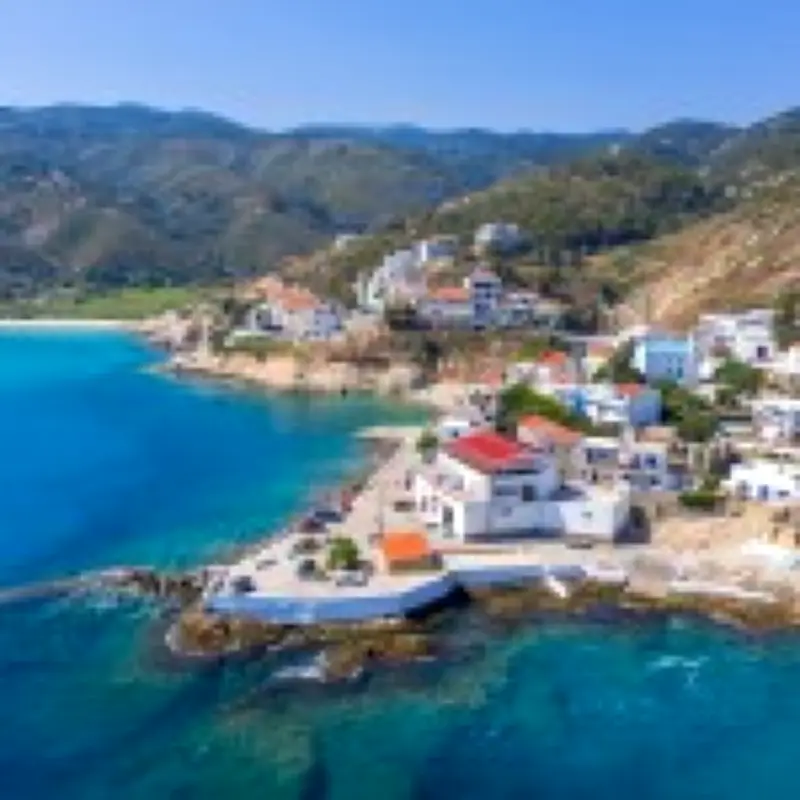
The Greek island of Ikaria, steeped in the myth of Icarus, is a Blue Zone where residents commonly live to 100 or more, drawing travelers seeking a slow-paced, healthful escape. This elusive Aegean island combines therapeutic hot springs, authentic villages, and azure waters, making it a standout destination as interest in Greece surges following Christopher Nolan's The Odyssey.
Myth and mystery
Ikaria's name comes from Icarus, who, according to legend, flew too close to the sun with wax-and-feather wings, plunged into the Aegean, and washed ashore on the island. Today, visitors can see the Rock of Icarus, about 50 metres off Vaoni beach, featuring a statue and a small stone amphitheatre used for the annual Icarus Festival in July and August, with world music, Greek performances, and art exhibitions.
The island is also linked to Dionysus, the god of wine, who was born on Ikaria and raised near Mount Drakano, home to the ancient 4th-century BC Tower of Drakano. This mythological heritage contributes to the island's thriving winemaking tradition.
Living the Blue Zone way
Ikaria is one of the world's Blue Zones, where one in three locals lives to 90. The island's 'siga siga' (slowly slowly) philosophy encourages a natural pace of life, focusing on community and living in the moment. This identity was shaped by history: during Greece's Civil War (1946-49), some 13,000 communist exiles, including poets and intellectuals, lived here, earning the island the nickname 'red rock' and fostering a free-thinking, creative spirit.
Residents' longevity is attributed to daily physical activity from the rugged terrain, midday rests, and a Mediterranean diet of legumes, potatoes, whole grains, olive oil, and red wine. Natural wellness is enhanced by hot thermal springs used since Roman times and the scenic Halarari Gorge, a protected reserve with waterfalls and rock pools.
Culture and beaches
To experience local life, visitors can explore Christos Raches, the 'village that never sleeps,' with its inverted daily routine, or join 'Panagiria' feast days celebrating saints with live music, dance, and wine. In August, up to 15 such feasts are scheduled across the island.
Beaches are a highlight, with Seychelles Beach offering a hidden cove of azure waters and white pebbles, and Nas Beach combining unspoiled sands with the 2,400-year-old ruins of the Temple of Artemis. Reaching Ikaria requires a bit of effort—no direct routes exist—but options include flying to Athens and connecting (around £230, 7 hours), taking a ferry from Athens (around £56), or flying to Samos and hopping a one-hour ferry (flights from £74, ferry around £6).