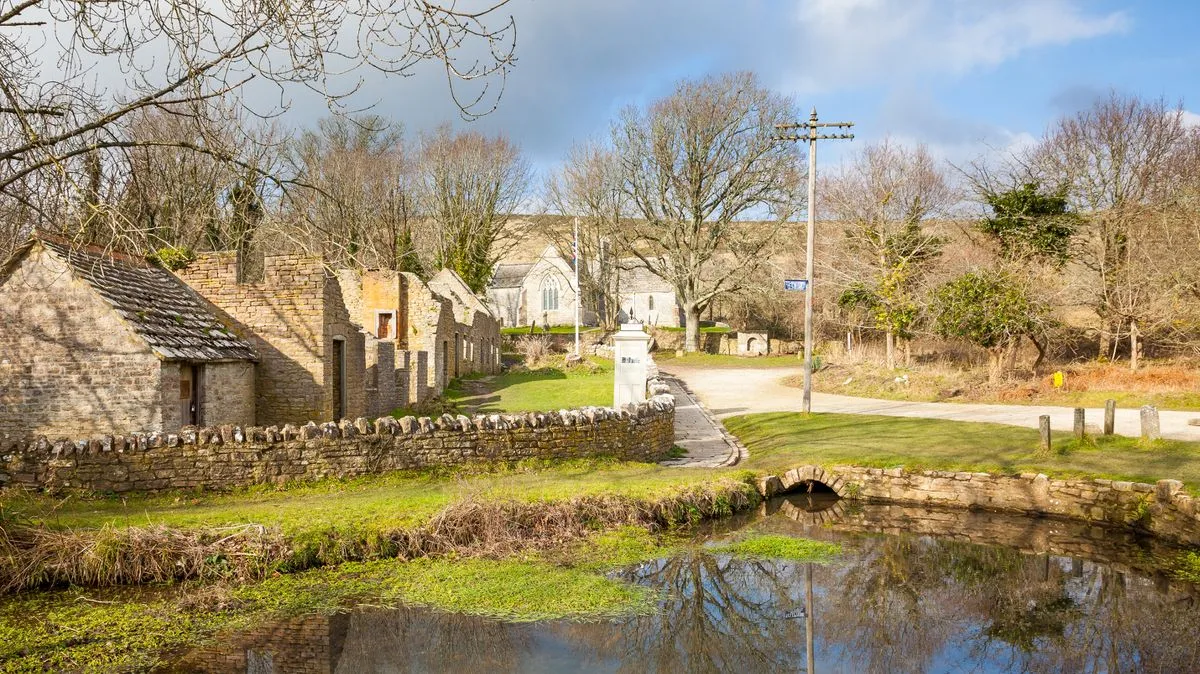
Tyneham Village, often referred to as Dorset's 'lost' village, stands as a stark reminder of the sacrifices of war. In 1943, at the peak of World War II, the British military took over the community and its surrounding area for training purposes, and no one has lived there since. The village remains a deserted ghost village, frozen in time, tucked away on the Jurassic Coast.
In 1943, the 252 inhabitants of Tyneham were told they needed to temporarily vacate their homes for the greater good. The village, due to its close proximity to the Lulworth firing ranges, was the perfect location for creating a realistic environment for troops preparing for warfare. Residents packed up their lives on the promise that they could return once the war was over.
On 16 November 1943, each household received a letter explaining that by 19 December they would need to leave their homes. Just six days before Christmas, the last service was held in St. Mary's Church. As they left, locals pinned a poignant note to the church door: 'Please treat the church and houses with care. We have given up our homes, where many of us have lived for generations, to help win the war to keep men free. We will return one day and thank you for treating the village kindly.'
The war lasted longer than expected, and in 1948 the Army placed a compulsory purchase order on the land. Tyneham remains part of the Armoured Fighting Vehicles Gunnery School, an important training establishment of the British Army. Most of the original inhabitants have now passed away, but their stories are preserved in a film called 'Tyneham Remembered'.
Today, visitors can wander through Tyneham's deserted streets at allocated times. The village, owned by the Ministry of Defence, is operated as a heritage site. Quaint stone cottages and ruins provide a captivating insight into the lives of the villagers who left. The surrounding landscape includes Worbarrow Bay, the Iron Age hillfort Flower's Barrow, and the headlands of Worbarrow Tout.