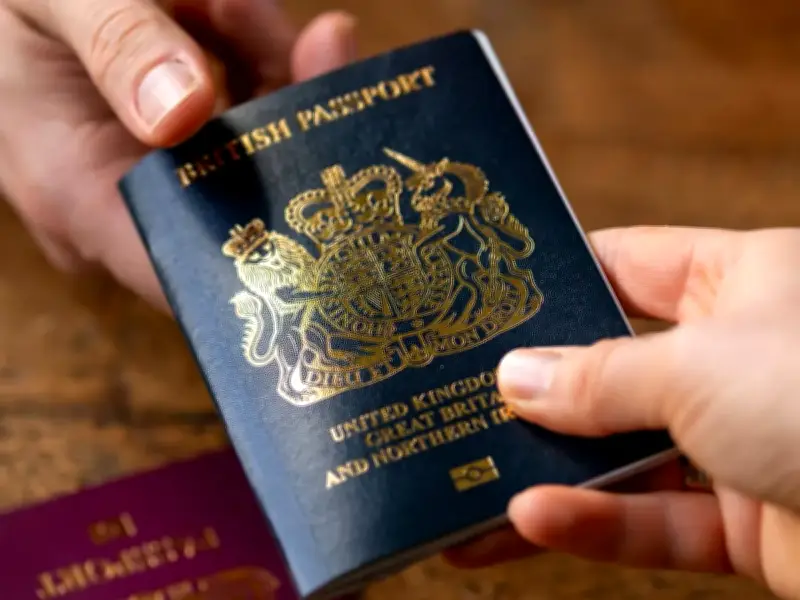
Brits planning to travel abroad during the October half-term have been urged to check a specific date on their passport or risk being turned away at the airport — and it is not the expiry date. Hundreds of holidaymakers are still being caught out by a common mistake, even when their passports appear valid. This summer, travellers discovered an issue with the date on their passports at the airport, leaving them unable to board their flight and told that their passports had, in fact, expired.
While many might assume the expiry date is the most important to check, there are two more dates that warrant attention and should be reviewed immediately for October half-term holidays. "Most of us naturally look at the expiry date when checking our passport, but for trips to the Schengen area, there are actually two dates you need to look at," travel expert at Teletext Holidays, Ricky Durrance, told Liverpool Echo.
Key dates for Schengen travel
Brits travelling to countries in the Schengen area must ensure their passport was issued less than 10 years before the date they enter the country. They must also ensure their passport is valid for at least three months after the day they plan to leave the country. The Schengen area includes major holiday hotspots that are set to welcome thousands of holidaymakers during the October half-term.
The countries in the Schengen area are: Austria, Belgium, Bulgaria, Croatia, Czechia, Denmark, Estonia, Finland, France, Germany, Greece, Hungary, Iceland, Italy, Latvia, Liechtenstein, Lithuania, Luxembourg, Malta, Netherlands, Norway, Poland, Portugal, Romania, Slovakia, Slovenia, Spain, Sweden, and Switzerland.
Issue date complications
This situation with the issue date is made even more confusing because, before September 2018, HM Passport Office could add up to nine months of unused validity from an old passport to a renewed one. This means some passports issued before the change could appear valid for up to 10 years and nine months. However, those additional months are not valid under the 10-year issue-date rule when travelling into the Schengen area.
Ricky warned: "Don't look at the expiry date alone. Check the issue date as well, and you’ll know whether your passport meets the requirements for your trip." For example, anyone planning to arrive in the Schengen area on October 24, 2026, should ensure their passport was issued less than 10 years before that date. A passport issued on September 5, 2016, with an expiry date of June 2027 would not be valid as it does not meet the issue-date requirement.
Expiry date and renewal costs
While the issue date is vital when travelling to the Schengen area, the expiry date is equally important. If you're planning to fly home from the Schengen area on November 1, 2026, your passport must be valid at least until February 1, 2027, as that's three months after your flight home. It's also vital to check children's passports, as they are only valid for five years.
"Check every passport in the household separately," the travel expert advised. "It only takes a couple of minutes, and then you can get back to looking forward to the holiday." If you find your passport is invalid for your October trip, you should renew it as soon as possible. The premium one-day passport renewal service costs £239.50 for an adult, while a standard online renewal fee is £102 for an adult and £66.50 for a child. To renew, visit the HM Passport Office website. Passports are typically issued within three weeks, but sometimes it can take longer, so it's best to be prepared or use the one-day premium service if your holiday is sooner.
Ricky further explained: "These passport rules apply to the Schengen area, while requirements elsewhere can be different. So, wherever you're heading this half term, check the passport requirements for your destination in plenty of time and then you can concentrate on getting excited about the holiday."