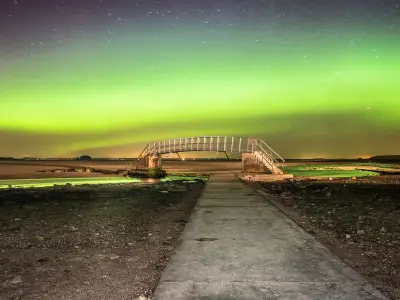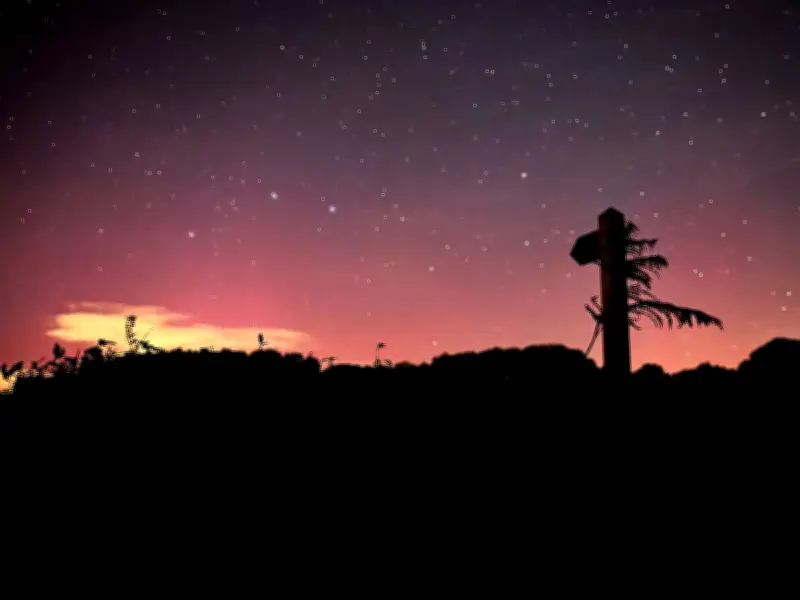
The Northern Lights made a spectacular and rare appearance over Wales on Saturday evening, with vivid colours illuminating the night sky across different parts of the country. Aurora Watch UK issued a red alert for sightings on Saturday night, and people soon captured stunning pictures of the skies above Wales.
Residents in Caldicot, Loughor and Pembrokeshire were treated to a colourful display, with further opportunities to witness the spectacle expected as the weekend progresses, according to the Met Office.
Forecast for further sightings
In its aurora forecast for the Northern Hemisphere, the Met Office said: "Two glancing coronal mass ejections followed by a coronal hole high speed stream bring a daily chance of enhancing the auroral oval, with sightings possible across Scotland and similar geomagnetic longitudes where skies are clear between October 10 and 13."
Those hoping to catch a glimpse of the Northern Lights stand the best chance at elevated locations such as hilltops and rural areas well away from light pollution.
Why the display is rare
The Met Office explained: "As the UK is south of where the natural aurora belt occurs (Norway/Iceland/Greenland), it takes a severe or extreme geomagnetic storm (Kp8-9+) to bring the belt southwards directly over the UK."
"This is a very rare occurrence. During more moderate to strong geomagnetic storms (Kp6-7), the Aurora borealis often moves southwards across southern Iceland or towards the Faeroes. These auroras can be faintly visible from the UK because they occur at high altitudes."
Photographer's account
Photographer Duane Evans, who caught a glimpse of the Northern Lights at the Loughor Estuary, shared his pictures and said: "We are very lucky to see it this far south. It's pot luck everytime with the weather. If the cloud didn't come over we would have had a brilliant show. These were lucky shots before cloud cover came over. There's always next time."
To see the Northern Lights, you need a clear night with no cloud cover, find a dark location with no light pollution, look toward the northern horizon, and be cautious that geomagnetic activity can cause disturbances to satellite navigation (GNSS/GPS etc).