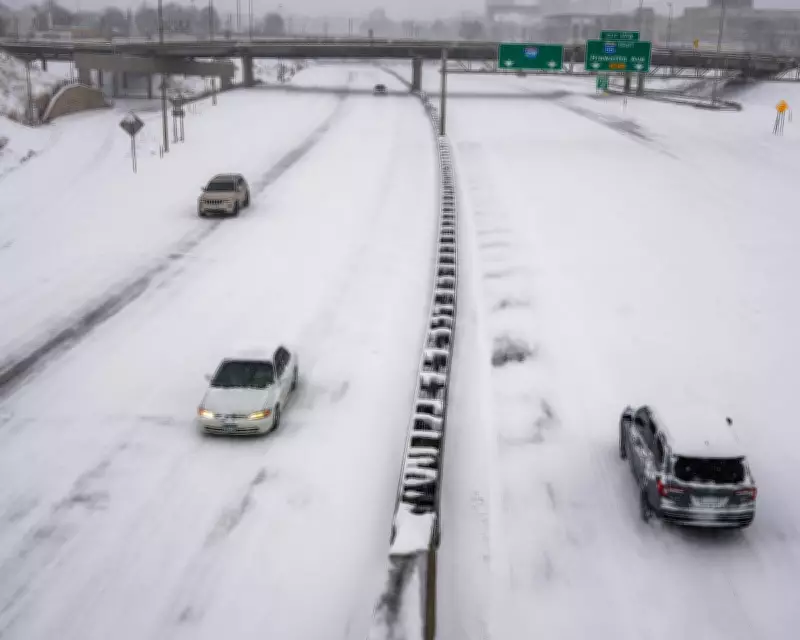
A powerful winter storm is sweeping across north-eastern United States and south-eastern Canada, bringing heavy snowfall, freezing rain, and strong winds. This system, which developed in the north-western US late last week, has intensified rapidly as it moves north-east, combining cold air from the north with warm, humid air from the tropics.
Storm Impacts and Severe Conditions
On Sunday, the storm generated a large area of snowfall across northern US states, while a narrow band of heavy rain and thunderstorms developed along a strong cold front stretching from the far north to the Gulf of Mexico. Strong, gusty winds fanned a large wildfire in Nebraska, burning over 550 square miles. The National Weather Service issued an outlook warning of tornadoes along this front, with a 15% risk assigned to an area home to more than 11 million people across three states for Monday.
Forecast for the Coming Days
As the new week begins, the storm centre will continue pushing north-east into south-eastern Canada, affecting north-eastern US, Ontario, Quebec, and Newfoundland through Monday and Tuesday. Impacts are expected to be most severe around the Great Lakes, with snowfall accumulations of up to 60-80 centimetres, followed by winds of 60-70 miles per hour, producing blizzard conditions and significant drifting.

Temperature Extremes Across North America
Meanwhile, the cold front farther south will sweep through the US east coast on Monday, ushering in a polar air mass that will drive temperatures 10-25 degrees Celsius below the seasonal average across the eastern two-thirds of North America. Sub-zero temperatures are likely to reach as far south as Alabama and Georgia. The coldest conditions in the US are anticipated in North Dakota and Minnesota, where temperatures may dip into the minus 20s Celsius (minus 4 Fahrenheit). In Canada's Manitoba and Ontario provinces, temperatures may fall close to minus 40 degrees Celsius.
In contrast, the western third of the continent is likely to record temperatures 10-15 degrees Celsius above the seasonal average, a sharp contrast that is not unusual across the US in late winter and early spring.
Weather Events in Australia
Elsewhere, Australia has experienced very high rainfall in recent weeks. In parts of Queensland last week, a year's worth of rain fell within 72 hours. Further rainfall is expected as a low-pressure system slides south-eastwards across central Australia early this week before stalling over the border region of New South Wales, Queensland, and South Australia. Up to 150 millimetres of rain is forecast in a 48-hour window. Flood warnings were issued last week and will remain in place across much of the Australian interior.