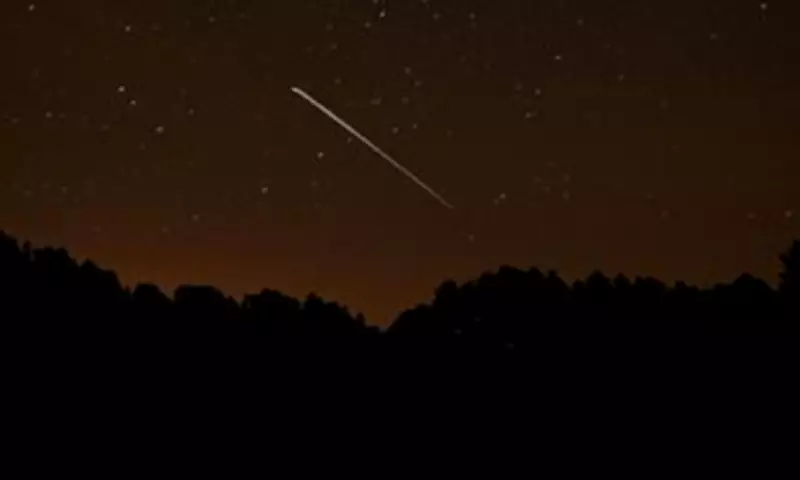
The annual Lyrid meteor shower is poised to deliver a celestial spectacle this weekend, as it reaches its peak under ideal viewing conditions. With a new moon creating dark, moonless skies, observers across the Northern Hemisphere can expect an enhanced display of shooting stars.
Optimal Viewing Conditions
This year's Lyrid meteor shower peaks on the night of April 21-22, coinciding with a new moon phase. The absence of moonlight will provide exceptionally dark skies, significantly improving visibility for meteor watchers. Under clear conditions, up to 18 meteors per hour may be visible, although rates can vary.
Historical Significance
The Lyrids are one of the oldest recorded meteor showers, with observations dating back over 2,700 years. They originate from debris left by Comet Thatcher (C/1861 G1), which orbits the sun every 415 years. As Earth passes through this trail of cosmic dust, particles burn up in the atmosphere, creating the bright streaks we see as meteors.

Best Practices for Observation
For the best experience, find a location away from city lights with a wide, unobstructed view of the sky. No special equipment is needed; the naked eye is sufficient. Allow your eyes at least 20 minutes to adjust to the darkness for optimal viewing. The radiant point—where meteors appear to originate—is near the constellation Lyra, but meteors can be seen anywhere in the sky.
While the peak occurs this weekend, the Lyrids are active from April 14 to 30, so some meteors may be visible in the days surrounding the maximum. Weather permitting, this event offers a prime opportunity for both amateur and seasoned astronomers to enjoy a natural light show.