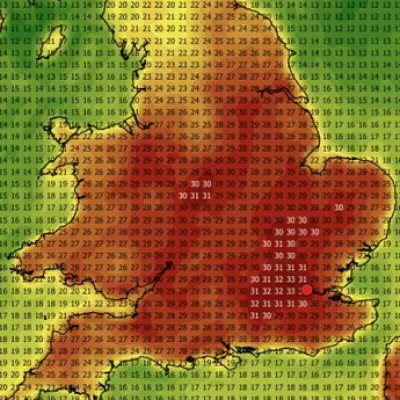
UK Weather Rollercoaster: Foehn Effect Brings 21C Heat Before March Snow
Britons are experiencing a meteorological rollercoaster this week, with the hottest day of 2026 so far expected on Wednesday, followed by a sharp return to wintry conditions with snow flurries forecast before the end of March. The Met Office has confirmed that temperatures could soar to around 21°C in parts of the UK, thanks to the little-known Foehn effect, a weather phenomenon that dramatically warms air on the leeward side of mountains.
Record-Breaking Warmth Driven by Foehn Effect
Wednesday is poised to be the warmest day of the year, with forecasts indicating temperatures could reach up to 21°C, significantly above the average March readings. In some regions, thermometers may register as much as 9°C higher than typical for this time of year, creating an early spring heatwave. Scotland already saw its warmest day of 2026 on Tuesday, with a maximum of 16.1°C recorded in Lossiemouth, surpassing the previous record of 19.2°C set in London on March 5.
Dan Harris, Chief Forecaster at the Met Office, explained that the unseasonable warmth is largely due to the Foehn effect. This phenomenon occurs when moist air is forced upward over mountain ranges, cooling and causing precipitation on the windward side. As the air descends on the opposite slope, it warms rapidly, leading to elevated temperatures. Harris noted that parts of western Wales and western England could see highs of 18°C to 20°C on Wednesday afternoon, with "possibly even 20°C on the cards."

Chilly Nights and a Dramatic Temperature Shift
Despite the daytime heat, clear skies will result in chilly overnight conditions, with some areas experiencing air frost. Harris highlighted the significant diurnal range this week, referring to the difference between maximum daytime and minimum nighttime temperatures. However, this warm spell is not set to last. Forecasts from WXCharts.com predict snow flurries in northwestern parts of the UK by Tuesday, March 24, marking a dramatic return to colder weather.
The Met Office's long-range forecast for March 22 to 31 indicates a transition to more changeable and unsettled conditions. Atlantic frontal systems are expected to cross the UK, potentially bringing a brief colder interlude with northerly winds during the final week of March. This could result in snow, particularly in northern areas, along with widely strong winds. By the end of the month, high pressure may dominate, leading to drier weather but with overnight fog and frost.
Spring Weather Volatility Explained
This sharp temperature swing is not uncommon during spring, when unsettled conditions often cause fluctuations between warm and cold spells. The Foehn effect exemplifies how localised weather phenomena can lead to significant regional variations, turning what might be a mild day into a record-breaking heat event before a swift return to winter-like chills. As Britons enjoy the unseasonable warmth, they should prepare for a rapid cooldown, underscoring the unpredictable nature of early spring weather in the UK.