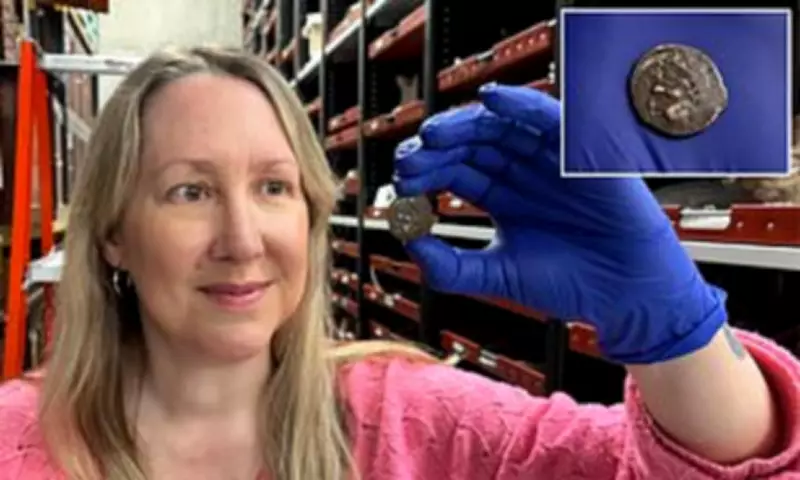
A remarkable discovery has been made in Leeds, where a coin once used to pay a bus fare in the 1950s has been identified as a rare artifact dating back more than 2,000 years. Researchers have confirmed that the coin was minted in the 1st century BC by the Carthaginians, an ancient Mediterranean civilisation with Phoenician roots, in Cádiz, Spain.
The Coin's Journey from Ancient Times to Modern Leeds
The story begins with James Edwards, who served as chief cashier for the Leeds Transport Company during the 1950s. In his role, he collected fares from the city's bus and tram drivers and would set aside any counterfeit or foreign coins he encountered. These coins were later passed down to his grandson, Peter Edwards, who has now revealed their incredible history.
For over seven decades, Peter, now 77 years old, carefully preserved the coins, unaware of their true significance. It was only after conducting extensive research into one particular coin that he uncovered its ancient origins. The coin features the face of the god Melqart on one side, depicted wearing a lionskin headdress and resembling the Greek hero Herakles.

Historical Context and Imagery
This imagery is not accidental. During that era, some Phoenician coins were inscribed with Greek designs to make them more appealing to traders across the Mediterranean. This strategic use of symbolism highlights the interconnectedness of ancient cultures and their economic practices.
Peter Edwards shared his personal connection to the coin, stating, 'My grandfather would come across coins which were not British and put them to one side, and when I went to his house, he would hand me a few. It was not long after the war, so I imagine soldiers returned with coins from countries they had been sent to.'
He added, 'Neither of us were coin collectors but we were fascinated by their origin and imagery – to me they were treasure.'
Donation to Leeds Museums and Galleries
Upon discovering the coin's true age and origin, Peter contacted Leeds Museums and Galleries and generously donated it to their collection of ancient currencies. The coin will now be housed at the Leeds Discovery Centre, which boasts an extensive array of currency from cultures around the world spanning thousands of years.
Peter expressed his satisfaction with the donation, saying, 'My first thought when I found out its origin was that I would like to return it to an institute where it could be studied by all, and Leeds Museums and Galleries kindly offered to give it a good home.'
He also reflected on his grandfather's legacy, noting, 'My grandfather would be proud to know, as I am, that the coin is coming back to Leeds. However, how it got there will always be a mystery.'
Recent Archaeological Discoveries in the UK
This find adds to a series of notable archaeological discoveries in the United Kingdom. In October, a metal detectorist uncovered a haul of up to 15,000 Roman coins buried in two clay pots in a Welsh field. The South Wales and Monmouthshire Numismatic Society suggested this could be the largest such discovery ever made in Wales.
Additionally, last year, experts published a report investigating why a £4 million collection of 70,000 coins and jewellery, found in 2012, was buried in Jersey. Archaeologists speculated that the hoard was brought to the Crown Dependency to prevent it from falling into the hands of Julius Caesar's Roman army during the Gallic Wars.
The discovery of the Carthaginian coin in Leeds serves as a poignant reminder of how everyday objects can carry profound historical significance, bridging the gap between ancient civilisations and modern life.