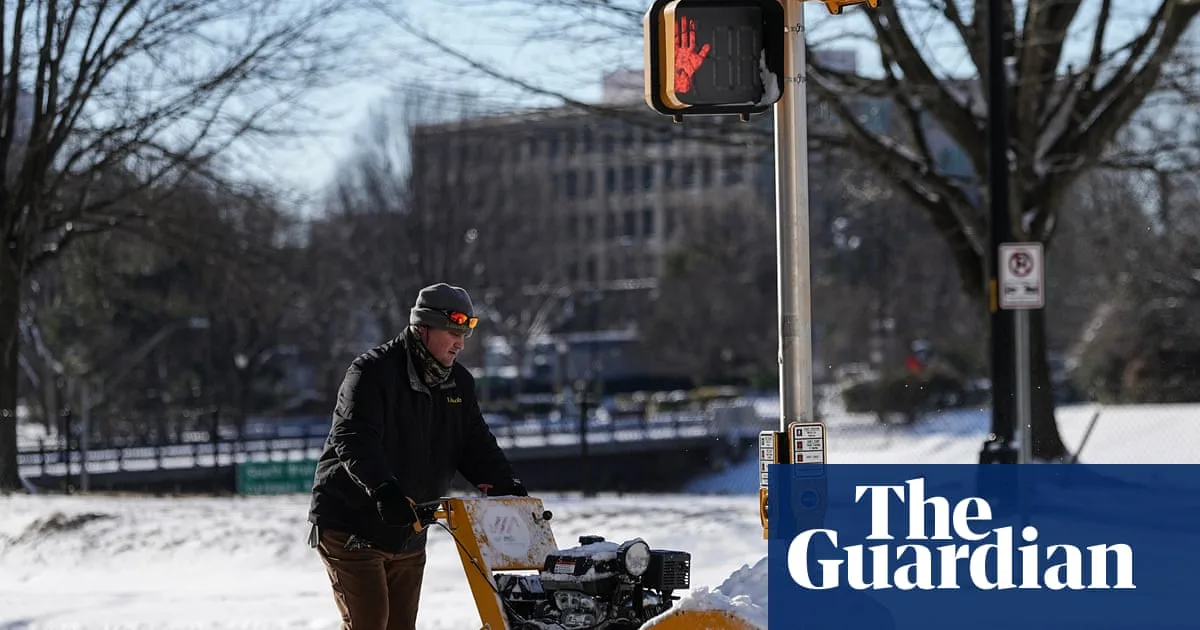
A powerful bomb cyclone has brought freezing temperatures and heavy snow to millions across the eastern United States, causing at least two deaths in North Carolina and prompting flight cancellations exceeding 4,600 over the weekend. About 150 million people were under cold weather advisories, with wind chills near zero in the south and the coldest air mass in south Florida since 1989.
North Carolina saw nearly a foot of snow in and around Charlotte, ranking among the top five snow events for the city. Governor Josh Stein reported over 1,000 collisions on snowy roads, resulting in two fatalities, and warned of black ice risks throughout the week. Flight cancellations totalled 2,800 on Saturday and 1,800 on Sunday, with over 800 of Sunday's cancellations at Charlotte Douglas International Airport.
In Florida, temperatures dropped to the 20s Fahrenheit in the panhandle and 30s in the south, breaking records in Daytona Beach (23F), Melbourne (25F), and Vero Beach (26F). Miami recorded its coldest morning since 2010 at 35F. The cold stunned green iguanas, causing them to fall from trees, and the Florida Fish and Wildlife Conservation Commission issued an executive order allowing residents to remove the invasive reptiles without a permit until 2 February.
Zoo Miami moved reptiles, amphibians, and small mammals into heated enclosures, while primates received extra blankets. Farmers sprayed water on strawberry and orange crops to protect them from ice. The bomb cyclone also knocked out power to tens of thousands across the southeast, with temperatures plummeting to levels not seen since 2010, 1989, 1977, and 1966 in some areas.