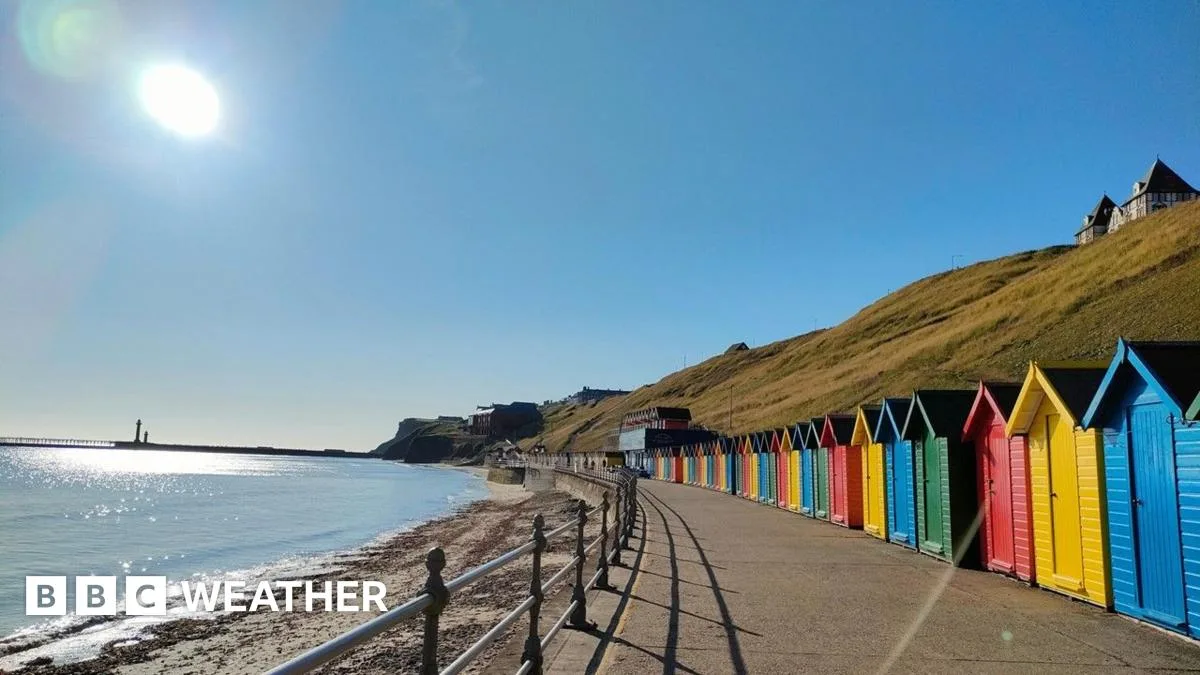
The UK is currently experiencing a prolonged spell of warm, sunny weather due to an Omega blocking pattern, a meteorological phenomenon that causes weather systems to become stationary. This pattern, named for its resemblance to the Greek letter Omega, involves a persistent area of high pressure flanked by low-pressure systems, disrupting the usual west-to-east flow of weather across the Atlantic.
Typically, the UK's weather is driven by the jet stream, a fast-moving air current about 10 kilometres up in the atmosphere, which guides high and low-pressure systems from west to east. However, when the jet stream weakens, it can meander north and south, forming ridges and troughs that lead to blocked patterns. In the current Omega block, high pressure has remained stationary near the UK, bringing dry and sunny conditions, while low pressure has become stuck over Iberia, causing heavy rain in Spain and Portugal.
Blocked patterns can lead to extremes depending on the season. In summer, high pressure can bring hot, dry spells, as seen in the 1976 heatwave. In winter, it can cause 'anticyclonic gloom' with persistent cloud and dull days. Conversely, if low pressure becomes stuck, it can result in prolonged rain and flooding. The Omega block is believed to have contributed to the devastating floods in Valencia in autumn 2024.
Scientists are investigating whether climate change is increasing the frequency of such blocking patterns. The polar jet stream is powered by temperature contrasts between the tropics and the Arctic, and as the Arctic warms rapidly, this contrast decreases, potentially weakening the jet stream. While evidence is mixed, some studies link changes in the jet stream to extreme events like the 2003 European heatwave and the 2021 floods in Belgium and Germany. Regardless, global warming is intensifying heatwaves and increasing the moisture-holding capacity of the air, heightening risks of wildfires and flooding when blocking patterns occur.