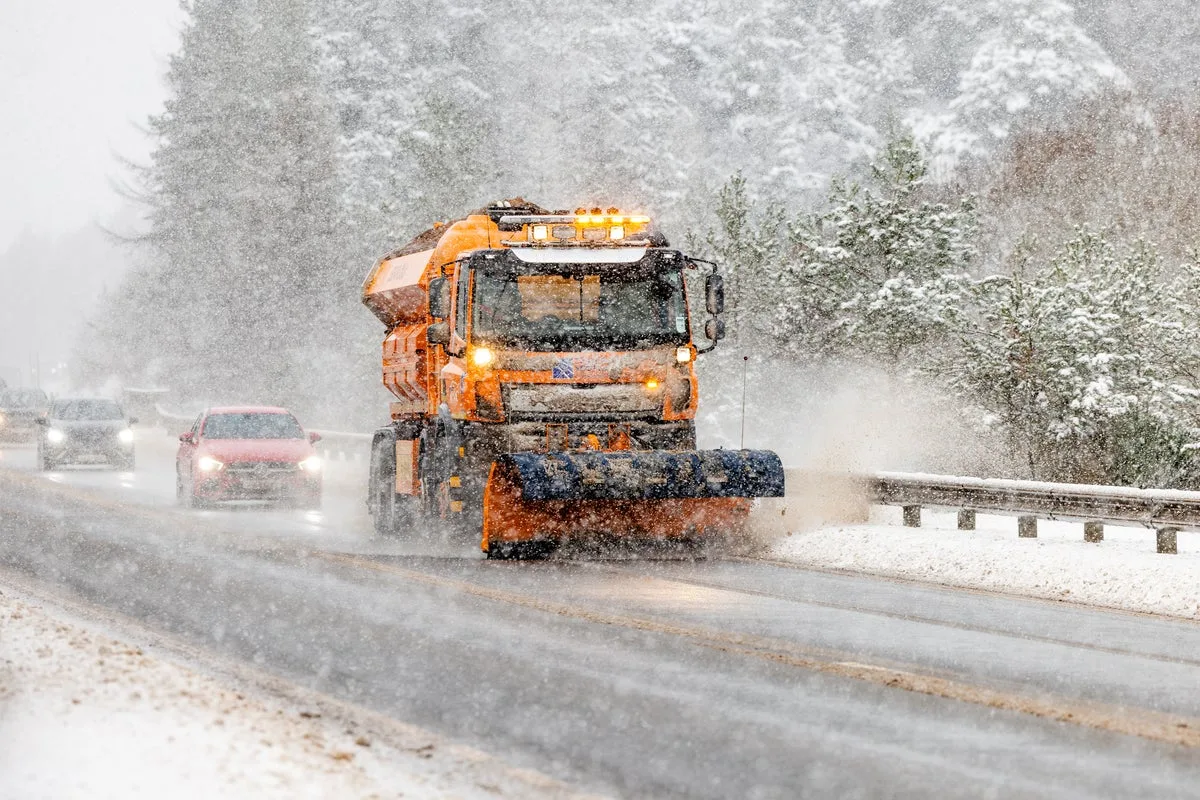
Britons are facing a bitterly cold first weekend of 2026 as Arctic winds sweep across the UK, bringing snow, ice, and the risk of travel disruption and power cuts. The Met Office has extended multiple weather warnings into Monday, with up to 40cm of snow possible in the highest parts of Scotland.
An amber warning for snow and ice is in place for parts of Scotland from midday Friday for 24 hours, with forecasters warning of a potential risk to life. Up to 20cm of snow could settle on low ground and 40cm on higher ground, leading to likely disruption to road, rail and air travel. Rural communities may be cut off, and power and mobile phone outages are possible.
The UK Health Security Agency has issued amber cold health alerts for England until 9 January, warning that increased deaths are likely due to the freezing temperatures. Dr Agostinho Sousa, head of extreme events and health protection at UKHSA, urged people to check on vulnerable friends and family, as the cold can increase the risk of heart attacks, strokes and chest infections.
Yellow warnings are in place across southwest England, Wales, and the east coast from Newcastle to Norwich. On Sunday, a yellow warning covers parts of Greater Manchester, Wales, and southwest England from 3pm to midday Monday. Temperatures are expected to hover around 1C for most of the country, dipping below freezing in parts of Scotland.
Snow showers are expected to push inland across Wales, northwest England, the West Midlands and southwest England on Sunday evening, with 1-3cm of snow likely in many places by Monday morning, and up to 5-8cm possible in some locations, particularly over higher ground in Wales. Blizzards are expected across the UK, including areas not yet under warnings.
Chief forecaster Neil Armstrong said the cold spell could last well into next week, with more warnings likely. He advised people to keep up to date with the latest forecast and plan ahead. On Shetland, accumulations of 10-15cm of snow are expected at low levels, with 20-30cm on high ground. Highland Council reported campervans and cars stuck on ice in tourist hotspots and urged motorists to drive with caution.