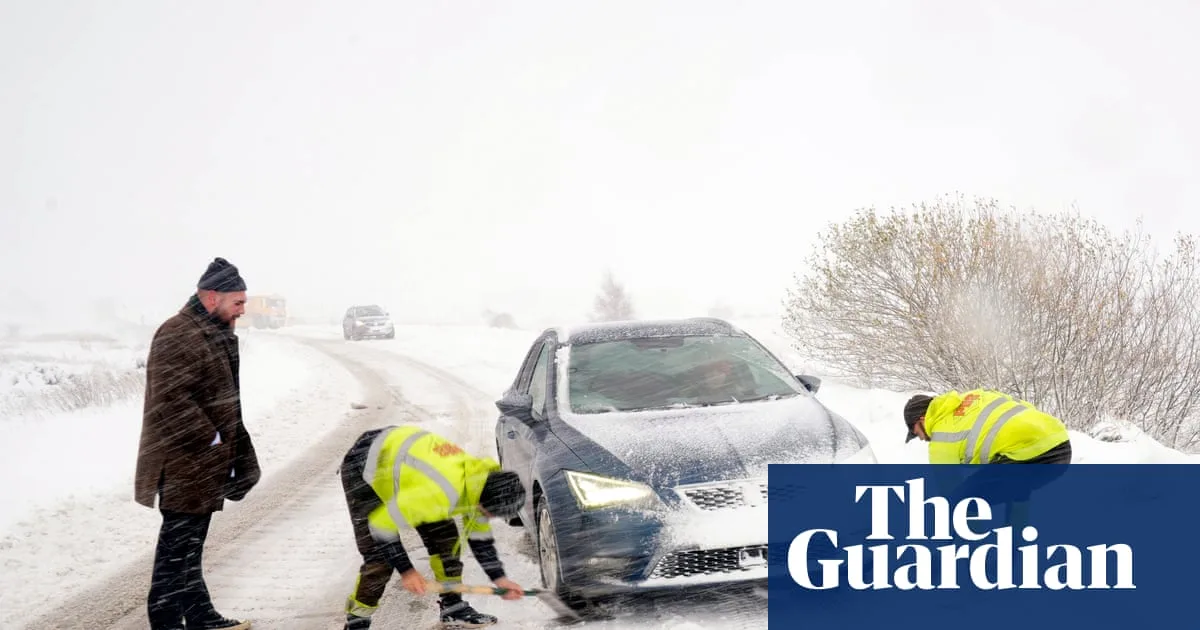
Striking weather maps issued by forecasters at Metdesk reveal that a significant 51-hour blizzard is poised to strike the United Kingdom, targeting nine major cities in a dramatic late-March cold snap. This wintry onslaught is expected to commence between March 24 and March 25, bringing heavy snowfall and disruptive conditions to urban centres across the nation.
Forecast Details and Affected Regions
The meteorological charts illustrate bands of snow moving southwards across the country from the early hours of March 24, with wintry showers persisting into the afternoon of March 25. Northern and western regions appear most vulnerable to the heaviest accumulations, though the maps suggest snowfall could extend further south at times as colder air sweeps across the UK.
Cities in the Firing Line
Towns and cities expected to experience snow at some stage during the 51-hour period include Plymouth, Southampton, and London in the south of England, as well as Glasgow, Edinburgh, and Dundee in the north. The Midlands and parts of north Wales, such as Birmingham, Stoke-on-Trent, and Wrexham, may also see flurries. However, nine major cities are anticipated to bear the brunt of the blizzard, according to reports.
The full list of cities includes:- Glasgow
- Edinburgh
- Dundee
- Leeds
- Manchester
- Birmingham
- Stoke-on-Trent
- Plymouth
- London
By midday on March 24, large swathes of Glasgow, Edinburgh, and Dundee are projected to be under bands of heavy snow, with cities including Blackpool, Manchester, and Birmingham predicted to see flurries on March 25.
Contrast with Recent Warm Weather
This impending cold snap presents a stark contrast to the recent warm weather experienced across the UK. Earlier this week, temperatures exceeded 20°C in Gogerddan, west Wales, with balmy conditions of 19°C recorded in Ross-on-Wye, Herefordshire. Today, the warmest weather is expected across Northern Ireland and parts of the Southwest of England.
The recent mild temperatures have also led to a rise in tree pollen levels nationwide. The University of Worcester, which collates and researches pollen data, noted on its website that aspergillus will be airborne over the next few weeks on dry days, with a high risk at times. Sufferers often report symptoms during mid-to-late March, and pleospora will be airborne during mild, dry weather.
Post-Blizzard Outlook
Following the blizzard, conditions are forecast to become changeable. The Met Office's long-range prediction indicates unsettled weather for many parts of the UK at the start of this period, as areas of low pressure and their associated frontal zones run close to or over the country. These conditions are likely to be most active in the north and somewhat weaker further south, closer to a ridge of high pressure extending northeast from the subtropical Atlantic.
There is also potential for a period of widely windy weather during the initial phase. By the turn of the month, high pressure may become more dominant again, bringing plenty of dry weather but with some overnight fog and frost.
Residents in the affected cities are advised to prepare for potential travel disruptions and hazardous conditions as this late-winter blizzard approaches, marking an abrupt shift from the unseasonable warmth.