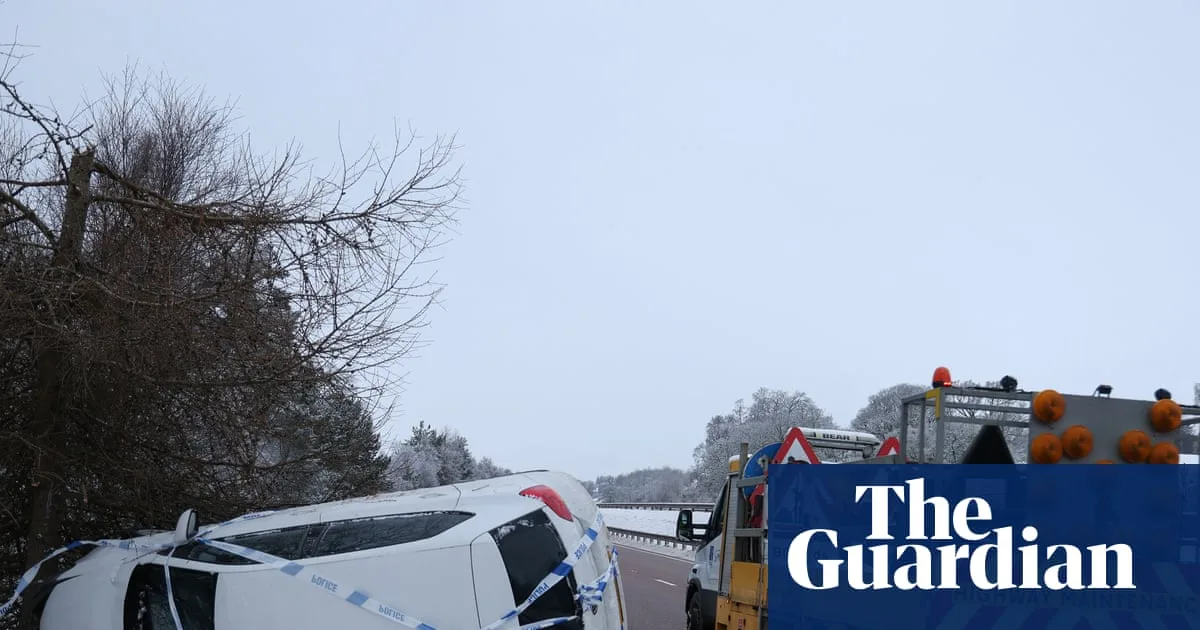
Storm Goretti has battered the UK with powerful winds and heavy snow, leaving thousands of homes without power and causing severe travel disruption. A rare red warning was issued for the south-west of England, where more than 37,000 properties were left without electricity on Friday evening, according to National Grid data.
Additional power cuts affected around 3,000 homes in the West Midlands, over 1,000 in the East Midlands and about 240 in Wales. Downing Street said approximately 0.21% of British customers were without power, with engineers working to reconnect them and around 150,000 customers already restored.
The storm brought a peak gust of 99mph at St Mary's on the Isles of Scilly, the highest recorded since 1991, and snow depths reached 27cm at Altnaharra in Sutherland, with 26cm at Loch Glascarnoch and 22cm at Durris in Aberdeenshire. The lowest overnight temperature was -13.3C at Braemar.
Travel was severely affected, with at least 69 flights to or from Heathrow cancelled, affecting more than 9,000 passengers, while rail services across Great Britain faced disruption. On St Michael's Mount in Cornwall, nearly 100 trees were blown down, representing about 80% of the island's trees, though no injuries were reported.
School closures were widespread, with more than 250 schools expected to remain shut in Scotland, including over 150 in Aberdeenshire, and dozens closed in the Midlands and Wales. Further snow is possible on Sunday, with yellow warnings in place across Scotland and parts of England. Steve Willington, the Met Office's chief forecaster, said 2-5cm could accumulate at low levels, with 10-20cm over higher ground, while central and southern England and Wales would see rain.
The Scottish Environment Protection Agency warned that rising temperatures and melting snow could increase flood risk. David Morgan, its flood duty manager, said thaw from Sunday onwards would heighten the likelihood of flooding.