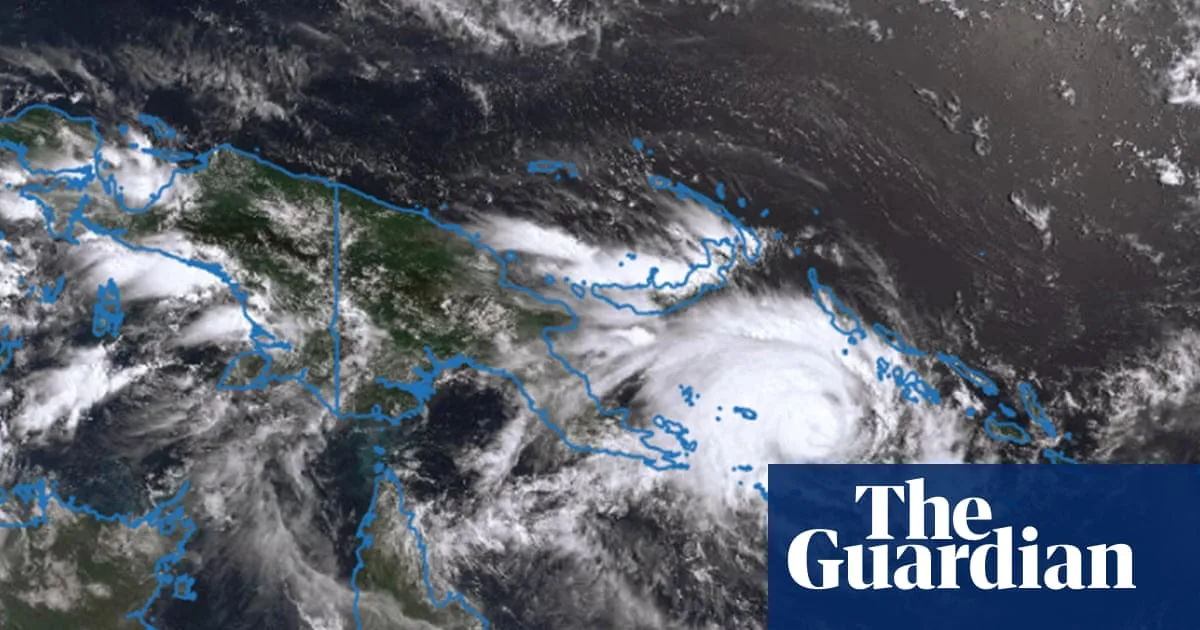
Another severe tropical cyclone could strike the Queensland coast just weeks after Cyclone Narelle caused widespread damage, the Bureau of Meteorology has warned. Severe Tropical Cyclone Maila, currently a category 3 system, is circling the Solomon Sea and is expected to turn towards Australia midweek.
The storm is producing wind gusts of up to 185 kilometres per hour, with sustained winds of 130 km/h. Meteorologist Helen Reid said the most likely scenario is that Maila will cross the coast at Cape York over the weekend, but cautioned that the path and strength remain uncertain.
“It’s still jury’s out on this one, but it does look like it will be heading towards that peninsula coastline over the course of the weekend,” Reid said. She added that the storm could strengthen to category 4 before weakening, and may hit the same area affected by Cyclone Narelle in March.
Narelle, this season’s strongest storm, made landfall in Cape York as a category 4 system on 20 March. Maila could also swing south towards Cairns or Townsville, or miss the coast entirely. The last April cyclone to cross Queensland’s coast was Cyclone Ita in 2014.