The Perseid meteor shower, one of the year's most spectacular celestial events, will reach its peak over the UK on the night of August 12-13, 2026, just hours after a dramatic solar eclipse. Skygazers can witness both events in a single evening, starting with the eclipse at sunset and continuing with meteors overnight.
Solar Eclipse Precedes Meteor Peak
The solar eclipse on Wednesday, August 12, will be the most significant seen in the UK since 1999, with the Moon covering up to 95 per cent of the Sun in Cornwall and 94 per cent in Pembrokeshire. In London and many other locations, coverage will be around 90 per cent.
As darkness falls, the Perseid meteor shower, active between July 17 and August 24 in 2026, will take center stage. According to NASA, the Perseids can produce between 50 and 100 visible meteors per hour at their peak under favorable conditions.
What Causes the Perseids?
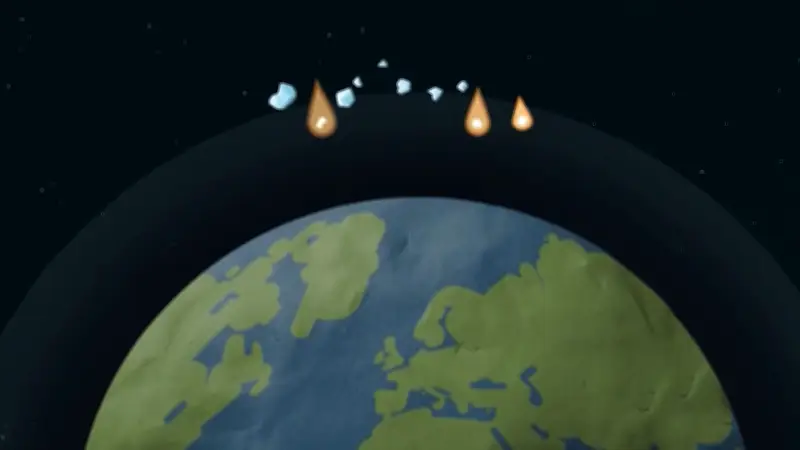
The Perseid meteor shower is caused by debris from Comet 109P/Swift-Tuttle. As Earth orbits the Sun, it passes through trails of this debris. When tiny particles enter the atmosphere at high speeds, they heat up and burn, creating bright streaks of light known as meteors or shooting stars.
Timings for the Eclipse and Meteor Shower
The best time to see the Perseids is between midnight and 5.30am on Thursday, August 13. However, Royal Museums Greenwich notes that the Perseids' radiant is always above the horizon in the UK, so some meteors may be visible as soon as the Sun sets on Wednesday.
Eclipse timings vary by location. In Edinburgh and Glasgow, the eclipse begins around 6.08pm, reaches maximum at 7.05pm, and ends about 8pm. In London, Bristol, and Cardiff, it starts at 6.17pm, peaks at 7.12pm, and finishes at 8.06pm.
How to Watch the Meteor Shower
No special equipment is needed to watch meteors. Find a dark location away from city lights, as light pollution is the main obstacle. Cloud-free nights with a dim Moon offer the best conditions. Royal Museums Greenwich states: "In 2026 the peak of the Perseid meteor shower fortunately occurs during a new Moon, so conditions are ideal for seeing the peak."
For the eclipse, health officials advise using specially designed eclipse glasses or handheld solar viewers to protect eyes. Alternatively, a pinhole viewer can be made at home.
Other Meteor Showers in 2026
Royal Museums Greenwich lists other active meteor showers for the rest of 2026, including the Draconids (maximum October 9), Orionids (October 21), Leonids (November 18), and Geminids (December 14).