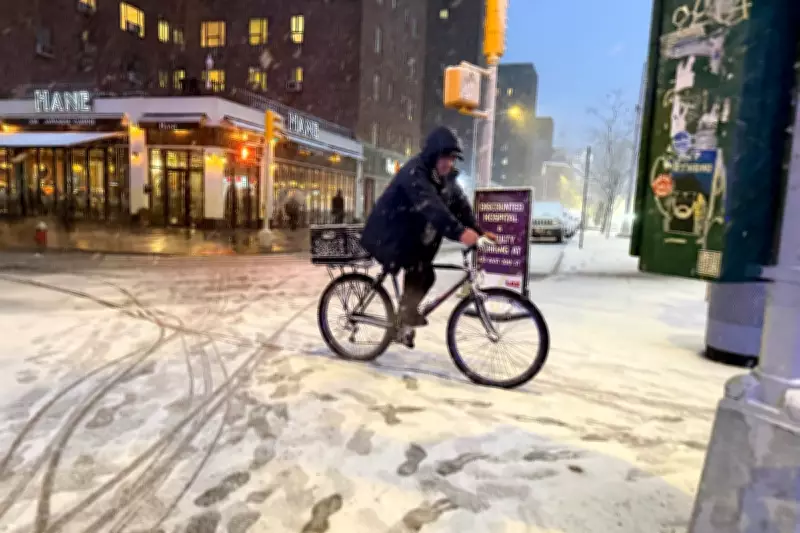
A severe winter storm has swept across the northeastern United States, prompting blizzard warnings and heavy snowfall from Maryland to Maine, affecting densely populated areas. Authorities have declared states of emergency in New York City, Philadelphia, and other locations, with officials bracing for the storm to intensify into a 'bomb cyclone'. The National Weather Service forecasts one to two feet of snow, accompanied by low visibility and strong winds, raising concerns about potential whiteout conditions and extended power outages.
Travel Disruptions and Public Safety Measures
In response to the storm, New York City, Rhode Island, and New Jersey have implemented bans on non-emergency travel, leading to significant disruptions. Roads have been closed, and flights have been canceled across the region, with public transport services experiencing widespread cancellations. These measures aim to ensure public safety as the storm develops, with emergency services on high alert to manage any incidents arising from the hazardous conditions.
Impact on Education and Cultural Events
The storm has forced major changes in daily life, with public schools in New York City and Boston canceling classes entirely. Philadelphia has shifted to online learning to minimize disruptions, while numerous cultural institutions and events have been affected. Broadway shows have been closed or postponed, and other venues have suspended operations, highlighting the broad impact of the weather on community activities and entertainment.

As the worst storm in a decade hits the area, officials like Mamdani have called students to announce school closures, emphasizing the seriousness of the situation. Residents are advised to stay indoors and avoid unnecessary travel until conditions improve, with ongoing monitoring by weather services to provide updates on the storm's progression and potential aftermath.