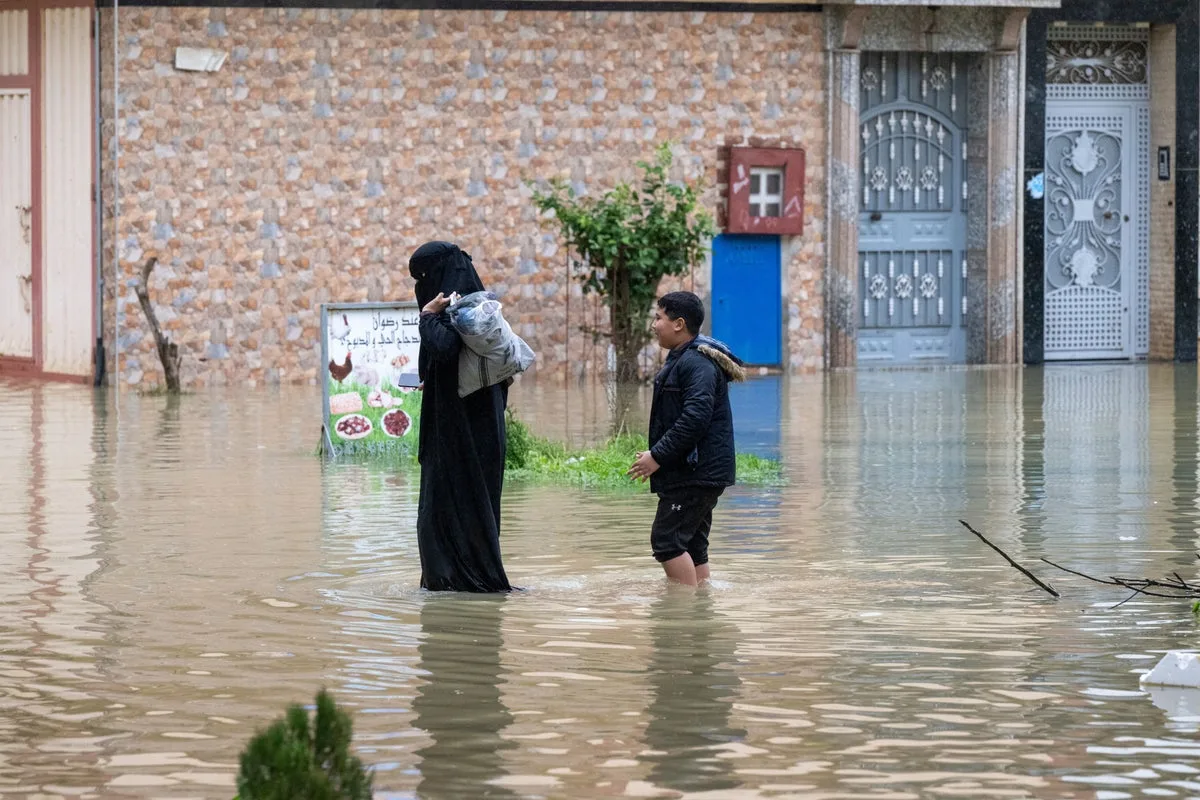
More than 143,000 people have been evacuated from northwestern Morocco after heavy rainfall and controlled water releases from dams triggered widespread flooding, the Interior Ministry has said. The stormy weather also disrupted maritime traffic between Morocco and Spain.
Torrential rains and water releases from overfilled dams raised water levels in rivers such as the Loukkous, flooding several towns including Ksar El Kebir. Authorities urged residents to leave immediately and deployed the army to evacuate the hardest-hit areas, setting up temporary shelters.
The ministry reported that 143,164 people had been evacuated, with up to 85% of Ksar El Kebir, known for sugar production, left nearly deserted. Schools and universities were closed. Witness footage showed damaged homes and landslides in the northern rural town of Bni Zid, with bulldozers clearing roads to restore access.
The heavy rains, the first significant precipitation after seven years of drought, have brought relief by filling reservoirs and securing at least a year of drinking water. However, they have also overfilled dams, damaged crops such as avocados, potatoes and olives, and disrupted port operations and shipments.
Morocco’s water ministry launched controlled releases from dams nearing capacity, including more than 372 million cubic metres from the Oued Al Makhazine dam near Ksar El Kebir. The dam, with a capacity of 672.8 million cubic metres, had exceeded that level by about 46%. Rising water levels in the Sebou River forced partial road closures, flooded neighbourhoods and halted train services.
In the last six months, Morocco recorded 150mm of rainfall, surpassing the average annual level by 32.5%. The meteorology directorate described the conditions as “exceptional” and issued a red alert for further heavy rain. Resident Mohamed El Hachimi, who left Ksar El Kebir, said: “The fear now is from the dam, which has surpassed its maximum capacity … and the rain is still pouring heavily.”