Severe Thunderstorms Batter Michigan, Causing Widespread Damage
Intense thunderstorms tore through parts of Michigan overnight from Tuesday into Wednesday morning, inflicting substantial damage on two ice arenas and various other structures, while also uprooting trees near the University of Michigan's main campus in Ann Arbor. The violent weather left streets flooded and neighborhoods in disarray across numerous southeastern Michigan communities.
Weather Service Investigates Tornado Possibility
National Weather Service teams are currently surveying the devastation in areas including Ann Arbor to determine whether one or more tornadoes touched down. As of Wednesday morning, no tornadoes had been confirmed. Meteorologist Sara Schultz indicated that the destruction likely resulted from a line of thunderstorms that moved into Michigan from Iowa, Wisconsin, and Illinois.
Wind gusts reached alarming speeds, with a 70 mph (112.6 kph) gust recorded at 1:49 a.m. Wednesday at the university's football stadium. Additional gusts of 69 mph (111 kph) and 62 mph (99.7 kph) were reported at Willow Run Airport and Detroit Metropolitan Airport, respectively. Schultz warned that another round of potent storms, carrying potentially damaging winds, was advancing into the region from western states.

Infrastructure and Campus Impacts
The storms caused structural damage to several public school buildings in Ann Arbor, many of which lost power. The school district announced on its Facebook page that safe passage for walkers and buses is compromised across much of the city due to downed power lines, flooding, water main breaks, gas leaks, and fallen trees and debris. Consequently, district schools and offices were closed on Wednesday. Officials cited a fiber outage affecting fire, phone, and camera systems, as well as building access, though it remains unclear if this outage is storm-related.
At Veterans Memorial Park Ice Arena, structural engineers are evaluating damage to a wall, while part of the roof was torn from the University of Michigan's Yost Ice Arena. Ann Arbor Mayor Christopher Taylor confirmed these assessments are ongoing.
Personal Accounts of the Storm's Fury
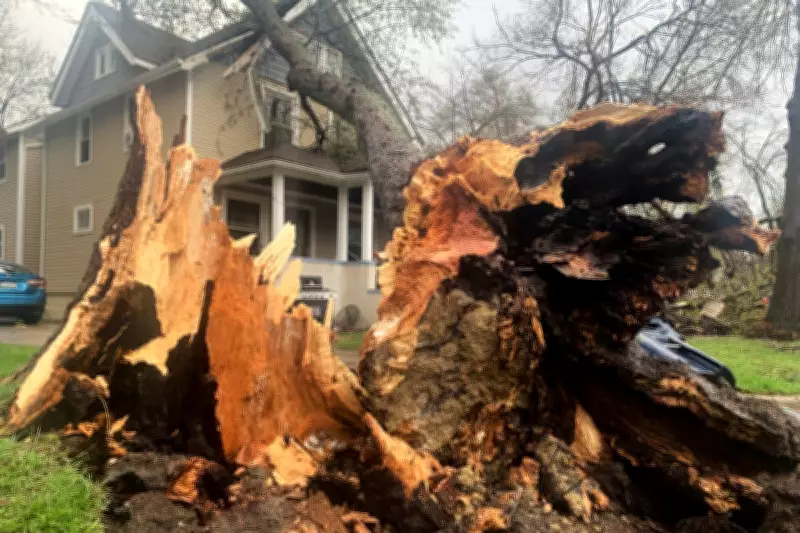
Near Yost Ice Arena, where utility workers cleared twisted metal debris, residents recounted narrow escapes. Seungjun Lee, a 20-year-old junior at U-M, shared that a massive tree outside his rented home was uprooted by the storm, barely missing his upstairs bedroom. If the tree fell down a couple more feet, I would not be standing here, Lee said. I'd be in the hospital. So, I'm feeling very lucky that ... the roof stopped it.
Lee and his six roommates were awakened by a siren and phone alerts between 1 a.m. and 2 a.m., urging them to seek shelter. Upon investigating, they discovered the fallen tree and later learned about the damage to Yost Ice Arena from a friend. Roommate Sam Zaruba, a 20-year-old junior from Grand Rapids, Michigan, expressed shock at the scene, while Gautam Nigam, a 21-year-old junior also from Grand Rapids, noted he still had to attend a final presentation despite the chaos.
Flooding and Evacuation Notices
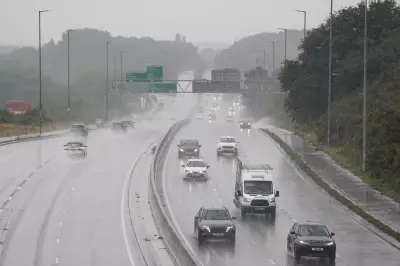
The storms dumped up to 2.5 inches (6.3 cm) of rain across southeastern Michigan, triggering flood watches for a large portion of the eastern Lower Peninsula, southeastern Michigan, northern Indiana, and northwestern Ohio. In Cheboygan County, northeastern Michigan, an evacuation notice was issued late Tuesday for low-lying areas following a levee breach in the Little Black River watershed. County emergency management clarified on Facebook that this breach, located northwest of Cheboygan and west of Lake Huron, is unrelated to efforts to divert flow from the Cheboygan Dam amid rising water levels from recent rainfall and snowmelt.
Corey Williams reported from West Bloomfield, Michigan, contributing to this coverage of the severe weather event that has left Michigan grappling with recovery efforts.