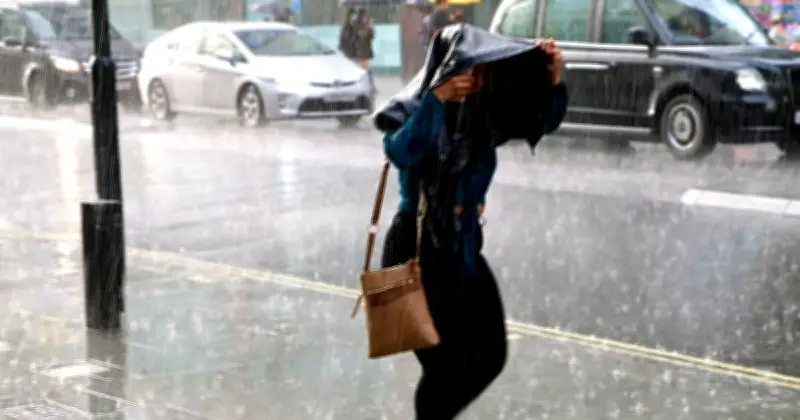
The Met Office has identified 13 areas across the UK that will experience heavy rain on Thursday, July 30, with most regions affected lying in Scotland, along with parts of Northern Ireland. Meanwhile, the southern half of the country is expected to see dry and sunny spells.
Weather forecast for Wednesday to Friday
According to the Met Office's outlook from Wednesday to Friday, southern areas will enjoy dry weather with sunny spells, while northern areas will see outbreaks of showers, sometimes heavy. The south is set to turn hot, particularly on Wednesday, before cooling down by the weekend.
Nick Finnis from Netweather.tv commented in a weather blog: "It will be a different story for the north Monday to Friday, where it will be cooler, cloudier and breezier with showery outbreaks of rain at times, locally heavy." He added: "Northern England northwards seeing more in the way of cloud off the Atlantic on the stronger southwesterly breeze here, with showery rain at times across the northwest."
Rainfall rates and affected areas
The weather maps show most rainfall will reach between 0.5 and 2 mm per hour, but several spots in the Highlands are forecast much heavier downpours, with rates of 2 to 8 mm per hour and isolated areas reaching 8 to 16 mm per hour between Inveraray and Finnart.
The full list of areas expecting rain of 2 mm per hour or more includes:
Scotland
- Peebles (2–4 mm/h)
- Campbeltown (2–4 mm/h)
- Strathyre (2–8 mm/h)
- Inveraray area (4–8 mm/h, with isolated spots reaching 8–16 mm/h between Inveraray and Finnart)
- Finnart (2–4 mm/h)
- Foyers (2–4 mm/h)
- Aberlour (4–8 mm/h)
- Strathpeffer (4–8 mm/h)
- Loch Glascarnoch (2–4 mm/h)
- Scardroy (2–4 mm/h)
- Kinbrace (2–4 mm/h)
Northern Ireland
- Coleraine (4–8 mm/h)
- Maghera (4–8 mm/h)
Ongoing wildfire situation
The rain forecast comes as parts of the UK have been dealing with raging wildfires. On Friday, residents in parts of Scotland were urged to evacuate after authorities declared a "major incident" as a wildfire in Cairngorms National Park continued to burn. Emergency crews had been battling the blaze for 10 days, with Police Scotland warning that changing wind conditions had accelerated the fire's spread since it first broke out on July 15.