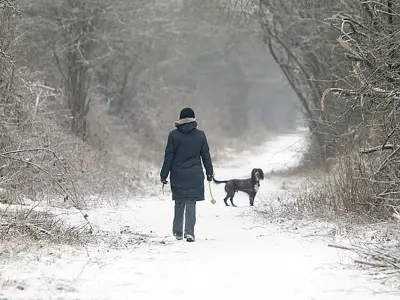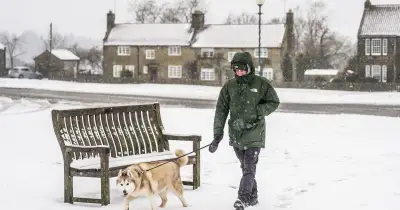
The Met Office has issued its first long-range forecast for the period leading up to Christmas, indicating a higher than normal chance of snow, particularly in northern areas.
The forecast covers Wednesday, December 9, through Wednesday, December 23, and suggests that the days before Christmas could see some snowfall, especially in the north.
Forecast Details
The Met Office said: "The tussle between areas of low pressure trying to move in from the west and high pressure to the northeast of the country building more bodily across the UK is likely to continue during this period."
It added: "Parts of the west and south are most likely to see wetter than average conditions. Spells of strong winds remain a possibility, but overall the chances of windy weather are lower than normal for early winter."
Temperature and Snow Chances
The forecast continues: "Given this broader setup, the chance of below average temperatures overall is higher than normal, especially for areas towards the north and northeast, where other winter hazards such as snow and ice are also relatively more likely. Milder interludes are more likely towards the south and southwest."
For the Met Office to declare a 'white Christmas', a single snowflake must be observed falling during the 24 hours of December 25, either by an official Met Office observer or by a Met Office automated weather station. This is because it needs to be officially verified both for its climate records and to provide consistency and certainty.
Historical Context
According to the Met Office, since 1960, around half of the years have seen at least 5% of the network record snow falling on Christmas Day. This means we can probably expect more than half of all Christmas Days to be a 'white Christmas'.
However, the fairy tale scene of widespread snow lying on the ground on Christmas Day is much rarer. There has only been a widespread covering of snow on the ground (where more than 40% of stations in the UK reported snow on the ground at 9 am) four times since 1960—in 1981, 1995, 2009 and 2010.