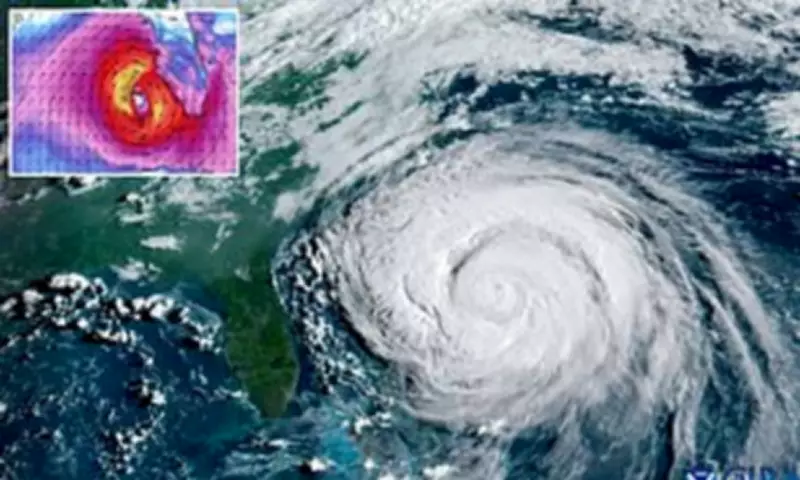
The Atlantic hurricane season officially commenced on Monday, and forecasters are already alerting the public to a potentially significant storm that could strike the Gulf Coast within days. A new model from the Global Forecast System (GFS), the primary US global weather model operated by NOAA’s National Centers for Environmental Prediction, indicates that an early-season tropical cyclone could sweep across much of Florida during the first week of June, bringing heavy rainfall and dangerous winds to millions of residents.
Storm Track Predictions
Florida Storm Chasers revealed a potentially hazardous storm track, depicting one scenario where a major low-pressure system moves up the Gulf of America in early June. The system could develop into a swirling tropical cyclone before hitting southern Florida around June 5, then rapidly moving over land on June 6 before exiting into the Atlantic. Another GFS model from May 27 predicted a potential tropical storm or hurricane, potentially named Arthur, rolling up Florida’s coast, striking the top of the state on June 5, then spinning west along the Gulf Coast toward Louisiana, Alabama, and Mississippi.
Meteorologists Urge Caution
While meteorologists caution that GFS models have historically overestimated tropical storms, they confirm an early tropical threat is emerging in the Gulf. AccuWeather meteorologists are tracking a tropical low-pressure area, the seed for a storm, expected to form in the central Gulf or near Florida next week. Warm ocean waters provide energy for such storms to organize. Forecasters also monitor tropical moisture moving north from the Caribbean, which could help Florida’s drought but also increase storm risk.

AccuWeather Lead Hurricane Expert Alex DaSilva stated, “While we always monitor the tropics for potential threats, we’ll be keeping a close eye on the central and eastern Gulf and the southwestern Atlantic. Climatologically, this region can experience early-season tropical development.” If a system forms, it could bring several inches of rain and localized flooding. However, it remains too early to predict a major storm accurately, as long-range models are less reliable.
Seasonal Forecast and Preparedness
Both AccuWeather and NOAA forecast a below-average hurricane season, with fewer named storms and only two to four major hurricanes likely in the Atlantic. Despite this, experts warn Americans to stay prepared. “There is no reason to let your guard down this year. It only takes one storm to cause major damage, disruption and heartache,” DaSilva said. He urged reviewing insurance, safety plans, and evacuation routes, and stocking emergency supplies. NOAA gives a 55% chance of a below-average season but a 10% chance of above-normal activity.
Officials advise residents in high-risk areas to stock up on essentials before emergencies. The National Hurricane Center reported 125 deaths in the 2025 Atlantic season, mostly from Hurricane Melissa in the Caribbean, and over $500 million in US damage, mainly from Tropical Storm Chantal in North Carolina. While fewer US strikes are expected this year, AccuWeather notes the threat of direct impacts remains elevated.