The United Kingdom recorded its highest ever temperature of 40.3C on Tuesday, according to provisional Met Office figures, as a ferocious heatwave swept north across Western Europe. Forecasters warned that temperatures were still climbing in many areas.
Extreme heat warnings were issued in France, and the Netherlands reported record July temperatures. Deadly wildfires in France, Portugal, Spain, and Greece have forced thousands of people to evacuate their homes. Two people were killed by forest fires in Spain's north-western Zamora region, and an elderly couple died while trying to escape fires in northern Portugal.
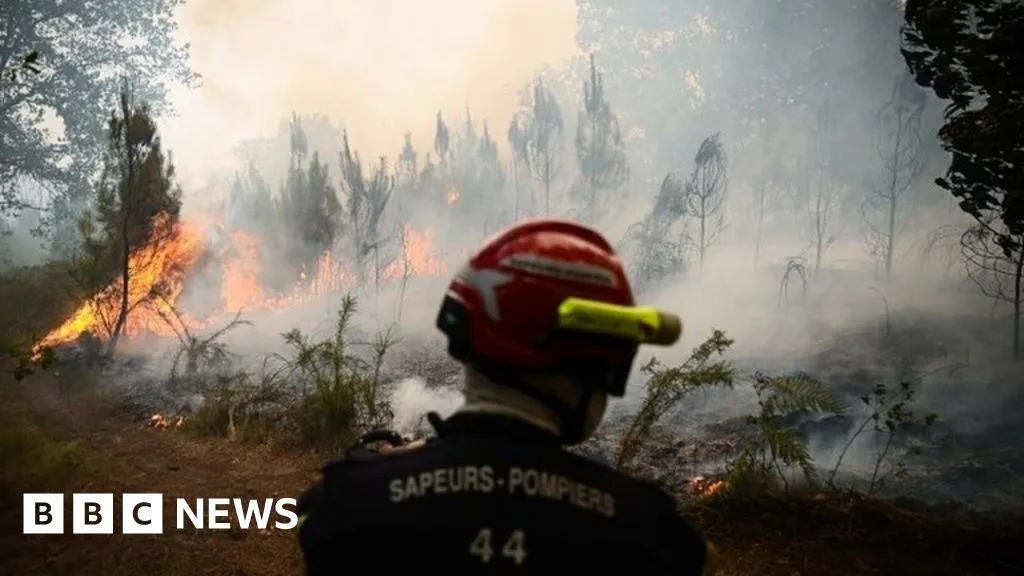
In France, wildfires continued to burn a day after several cities, including Nantes in the west, saw their hottest-ever day. More than 30,000 people have fled, with several campsites destroyed and emergency shelters set up. The Gironde region in the south-west has been particularly badly hit, with two blazes destroying 19,300 hectares of land. The city of Bordeaux was blanketed by smoke early on Tuesday as the wind changed direction.
The UK's Met Office said 40.2C was provisionally recorded at Heathrow Airport west of London on Tuesday, with extreme heat warnings covering central, northern, and south-east England. Forecasters say the heatwave is heading north, with the mercury expected to hit 40C in the far south of Belgium and western and southwestern Germany. Germany's DWD weather service recorded a national record temperature of 41.2C in Duisburg in July 2019, and similar highs were possible on Tuesday along the River Rhine.
In Spain and Portugal, more than 1,000 deaths have been attributed to the heat in recent days. A forest fire in Losacio in north-west Spain left one firefighter dead, and the body of a 69-year-old shepherd was found. Temperatures in Portugal hit 47C on Thursday, a record for July. Several villages were evacuated as a fire spread in the Murça area of northern Portugal, and a man and a woman in their 70s died in their car while trying to flee the flames.
German Environment Minister Steffi Lemke said the climate crisis meant the country had to rethink its preparations for very hot weather, drought, and flooding. Heatwaves have become more frequent, more intense, and last longer because of human-induced climate change.