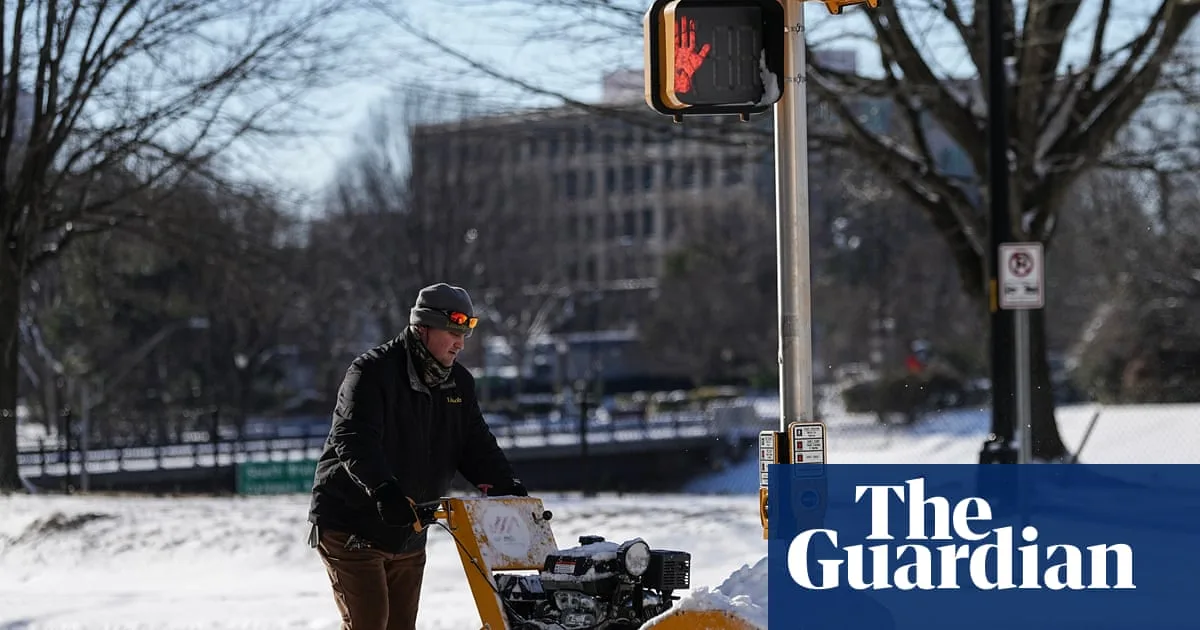
A powerful bomb cyclone has brought freezing temperatures and heavy snow to millions across the eastern United States, with Florida experiencing colder conditions than parts of Iceland. About 150 million people were under cold weather advisories from the Gulf coast to New England, with wind chills near zero in the south and the coldest air mass in south Florida since December 1989.
In North Carolina, heavy snow of nearly a foot (30cm) fell around Charlotte, marking a top-five snow event for the city. Governor Josh Stein reported over 1,000 collisions on snowy roads resulting in two fatalities over the weekend, warning that black ice would remain a risk due to below-freezing night-time temperatures.
Flight cancellations exceeded 2,800 on Saturday and 1,800 on Sunday, with over 800 of Sunday's cancellations at Charlotte Douglas International Airport. The frigid weather broke low temperature records in Florida, including Daytona Beach at -5°C (23°F), Melbourne at -4°C (25°F), and Vero Beach at -3°C (26°F). Miami saw its coldest morning since 2010 at 2°C (35°F).
The cold caused iguanas to fall from trees, prompting the Florida Fish and Wildlife Conservation Commission to issue an executive order allowing residents to remove cold-stunned green iguanas without a permit until 2 February. The iguanas, an invasive species, enter a temporary state of torpor in near-freezing temperatures, losing muscle control.
Zoo Miami moved reptiles, amphibians, and small mammals into heated enclosures, providing heat lamps and blankets for primates. Farmers sprayed water on strawberries and oranges to protect crops from ice. The bomb cyclone also knocked out power to tens of thousands across the south-east.