Deadly Tornado Outbreak Claims Eight Lives Across Central United States
Communities in the central United States are grappling with devastation and loss after a series of powerful tornadoes swept through the region over the weekend, resulting in at least eight confirmed deaths and numerous injuries. The National Weather Service has verified 18 tornadoes occurred between Thursday and Saturday, with eight classified as EF2 or EF3, featuring intense winds ranging from 111 to 165 mph. This tragic event underscores the growing frequency of severe weather incidents in the era of global warming, raising urgent concerns about climate impacts.
Severe Damage and Fatalities in Michigan and Oklahoma
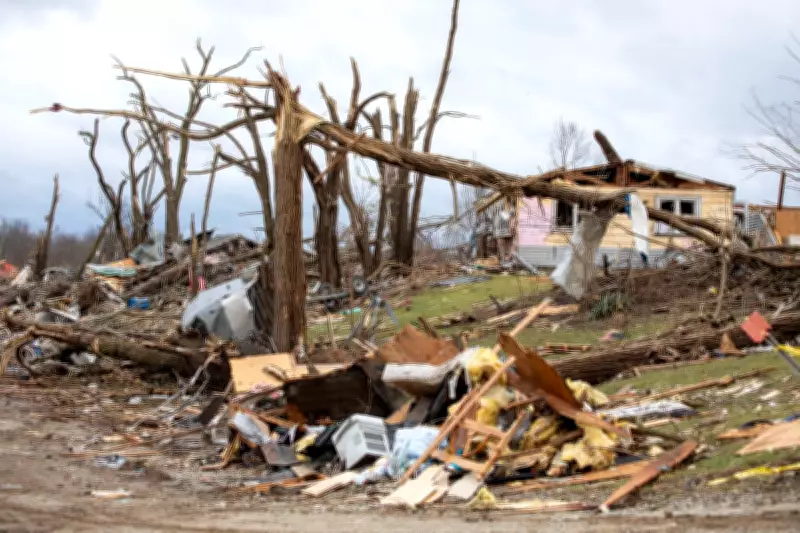
In Michigan, the small town of Union City in the south-west part of the state bore the brunt of the storms, experiencing winds of up to 160 mph that caused catastrophic damage. According to reports, several homes were completely destroyed, lifted off their foundations and reduced to cement blocks, while parked cars were crushed by falling trees and debris littered neighborhoods. Tim Miner, the Branch County emergency management coordinator, indicated that approximately 70 homes in the Union City area sustained damage. The Branch County Sheriff's Office has identified three victims killed by an EF-3 tornado: William Andrew Akers, 63; Keri Ann Johnson, 54; and Penni Jo Guthrie, 65. Additionally, a 12-year-old boy, Silas Anderson, died from injuries sustained in a tornado in Edwardsburg, Michigan. Data from the National Oceanic and Atmospheric Administration reveals that these deaths mark the highest single-day tornado fatality count in Michigan since 1980.
Government Response and Recovery Efforts
Michigan Governor Gretchen Whitmer toured the affected areas on Sunday, following at least four tornadoes that struck south-west Michigan. She shared a video on social media after a helicopter inspection of the wreckage, emphasizing that the state is rallying support for the impacted communities. Governor Whitmer stated, "Local crews have been working around the clock to canvass the areas, deliver resources, and clean up the damage." To facilitate recovery, she declared a state of emergency, unlocking government resources aimed at aiding relief operations. This response comes as residents and authorities work tirelessly to rebuild and provide assistance to those affected by the storms.

Broader Context of Increasing Severe Weather Events
The recent tornado outbreak in the central US follows closely on the heels of multiple blizzards that battered the north-east earlier this winter, contributing to what many describe as one of the most brutal winters in recent history. Scientists and previous analyses have linked the burning of fossil fuels to the climate emergency, noting that it has exacerbated storm intensity and frequency. As communities across the region begin the arduous process of cleanup and recovery, this event serves as a stark reminder of the escalating challenges posed by climate change, urging greater attention to mitigation and adaptation strategies.