Blizzard Brings Northeast US to a Standstill with Travel Bans and Whiteout Conditions
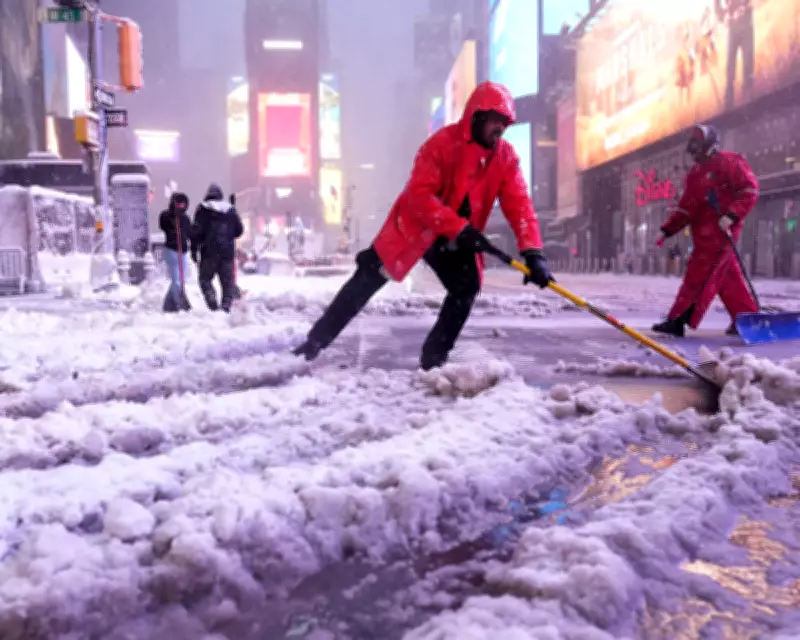
Millions of residents across New York City and the northeastern United States found themselves confined to their homes on Monday as a powerful blizzard unleashed heavy snow and fierce winds, triggering widespread road travel bans and blizzard warnings. The storm, which intensified overnight, created perilous whiteout conditions across this densely populated region, severely disrupting daily life and infrastructure.
Record Snowfall and Treacherous Travel Conditions
Snowfall rates reached an alarming 2-3 inches (5-7.6 cm) per hour early Monday, stretching from New York through Massachusetts. Some areas have accumulated well over a foot (30 cm) of snow since Sunday, accompanied by wind gusts exceeding 30 mph (48 km/h) and drastically reduced visibility. Long Island’s MacArthur airport reported a staggering 20 inches of snow by Monday morning, while Freehold, New Jersey, recorded 19 inches. The National Weather Service (NWS) described travel conditions as "nearly impossible", with blizzard warnings extending from Maryland to Maine.
Widespread Disruptions and Emergency Measures
In response to the "dangerous blizzard conditions", authorities implemented strict non-emergency travel bans on all streets in New York City until noon Monday, with similar restrictions enacted in Rhode Island and New Jersey. The storm's impact extended to air travel, with over 5,000 flights canceled across the United States, predominantly affecting New York, New Jersey, and Boston. Public transit services were suspended in multiple areas, and even delivery platforms like DoorDash halted operations in New York City overnight.

Power outages compounded the crisis, leaving more than 300,000 customers without electricity along the east coast early Monday, including approximately 115,000 in New Jersey, according to PowerOutage.us. Emergencies were declared in cities such as New York and Philadelphia, as well as several states from Delaware to Massachusetts, mobilizing readiness efforts to address the escalating situation.
Meteorological Warnings and Potential Bomb Cyclone
The NWS issued stark warnings, noting that "the combination of heavy snowfall and strong winds will continue to produce blizzard conditions along the Northeastern Seaboard", making travel "extremely treacherous". Meteorologist Frank Pereira indicated the storm could potentially develop into a bomb cyclone, characterized by a rapid pressure drop of at least 24 millibars within 24 hours. The NWS forecasted the snow would taper off by Monday afternoon, but concerns remained about strong wind gusts causing further whiteout conditions and a "potentially historic/destructive storm" southeast of the Boston-Providence corridor.
Bryce Williams, a meteorologist with the NWS’s Boston office, emphasized the risks: "Winds like that, combined with heavy, wet snow, are a recipe for damaged trees and prolonged power outages. That’s what we’re most concerned with, is the combination of those extreme snow amounts with that wind."
Community and Institutional Responses
Educational institutions adapted to the chaos, with Philadelphia switching to online learning and Boston and New York City canceling public school classes for Monday. New York City Mayor Zohran Mamdani urged children to "stay cozy" during the storm. Outreach workers actively encouraged homeless individuals to seek refuge in shelters and warming centers, while numerous landmarks and cultural venues, including New York’s Museum of Modern Art and Arlington National Cemetery in Washington DC, announced closures. Broadway shows were also canceled on Sunday evening.
In preparation, New York City officials not only deployed robust plow operations but also recruited additional workers to shovel snow, with some beginning as early as Sunday night. John Berlingieri, owner of Berrington Snow Management, exemplified the private sector's response, canceling a family trip to Puerto Rico to focus on clearing snow from millions of square feet of asphalt on Long Island. His team spent days recharging equipment and preparing for around-the-clock work, anticipating at least a week of continuous effort.

As the blizzard continues to impact the Northeast, residents and authorities remain vigilant, grappling with the challenges of snow removal, power restoration, and ensuring public safety amidst one of the most severe winter storms in recent memory.