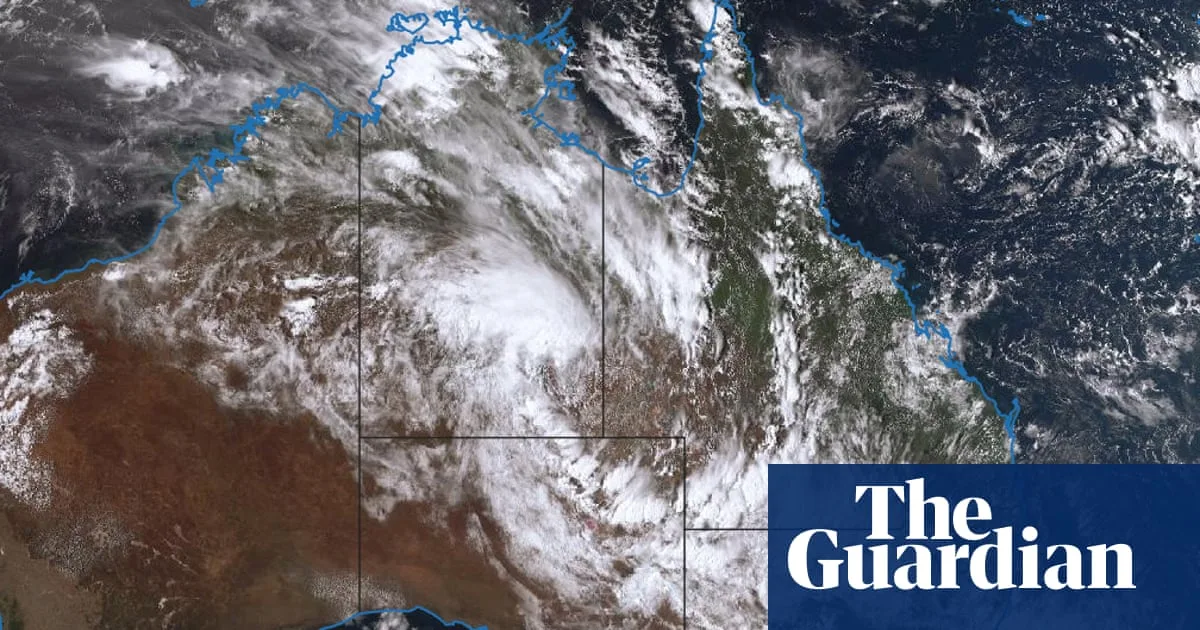
A lingering monsoon low could deliver a year’s worth of rain in a week to parts of inland South Australia, Queensland and New South Wales, just weeks after record-breaking heat. The Bureau of Meteorology (BoM) has issued severe weather warnings for north-western NSW, central and northern Victoria, north-east South Australia and south-western Queensland, with heavy, locally intense rainfall predicted.
Forecasters expect 200-300mm of rain in north-eastern SA and north-western NSW over the coming days, with widespread falls of 100-200mm across inland areas. Further thunderstorms and potential flash flooding could affect central Victoria, including Melbourne, on Tuesday. “Those are some big numbers in a very dry part of the country,” said Dean Narramore, a senior meteorologist with the BoM.
Outback towns such as Marree, about 600km north of Adelaide, could receive more than their average annual rainfall of 142mm. The heavy falls follow a very dry year in which only 37mm was recorded throughout 2025, and weeks after residents endured five consecutive days of at least 48C. Communities like Tibooburra and areas north of Broken Hill in NSW, and Birdsville in Queensland, could also see significant falls.
Heavy rain and flooding have already disrupted transport. The Indian Pacific tourist train, operating between Perth and Sydney, was turned around and sent back to Perth after sections of track up to 100m were washed away. The Australian Rail Track Corporation said repairs could take more than a week, and further severe weather later in the week may worsen the damage. Several outback roads, including the Birdsville Track, were closed on Monday.
The rains are not entirely destructive. Narramore noted they would fill aquifers, rainwater tanks and dams, and heavy rain was falling directly over Kati Thanda-Lake Eyre, which could become “pretty full” by next week. Meanwhile, Scone in the NSW Hunter region recorded 102.6mm at the airport on Sunday, setting a new record for the highest daily rainfall in February. Global heating, driven mainly by the burning of fossil fuels, has increased the frequency and severity of such extreme weather events.