Apocalyptic Red Skies Over Australia Explained by Weather Expert
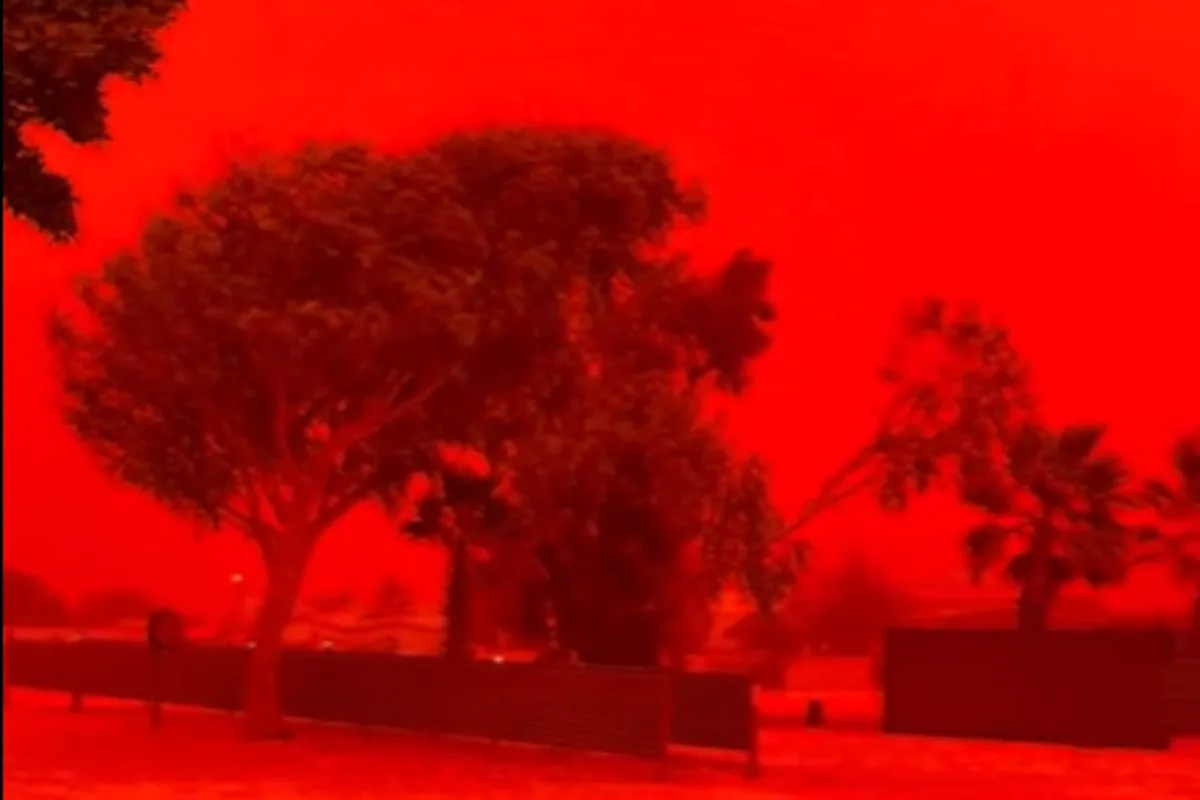
The apocalyptic red skies that recently engulfed Western Australia have captured significant international media attention, creating a spectacle that seemed almost otherworldly. Crimson dust, whipped up by the powerful outer winds of Severe Tropical Cyclone Narelle, was responsible for this extraordinary phenomenon, painting the heavens in deep shades of orange and red.
Rare Weather Event in Northwest Australia
Spectacular weather events of this nature are not common in northwest Australia, as they require very specific environmental conditions to occur. Most tropical cyclones that impact this arid region do not produce such vividly coloured skies. Mega dust storms, which can dramatically alter the sky's appearance, typically happen during prolonged drought periods. A memorable example occurred over Melbourne on 8 February 1983, when the sky turned a red-brown hue before becoming pitch black.
Four Key Factors Behind the Red Skies
So what exactly caused Cyclone Narelle's dust storm and the intensely red sky? Four critical factors converged to create these conditions:
- A very dry and exposed landscape featuring distinctive red soils
- A notable lack of preceding rainfall in the region
- Exceptionally strong winds ahead of the cyclone's rain bands
- A particular wind direction that carried the dust effectively
Why This Dust Storm Was So Spectacular
Australia's northwest is one of only a few locations worldwide where tropical cyclones affect an otherwise arid desert climate, similar to the Arabian Peninsula and semi-arid parts of India and Pakistan. These dry regions possess minimal natural vegetation to protect fragile soils from cyclonic winds. In Western Australia's northwest, the iron-rich soils that attract major mining companies also give the area its exceptional red appearance.
According to the Bureau of Meteorology, in the six weeks prior to Cyclone Narelle, the greater northwest region had received just 10-50 mm of rainfall, leaving the barren landscape extremely dry. This dryness was a crucial factor behind the size and magnitude of the red-tinged dust storm.
The Mechanics of the Dust Storm Development
In the Southern Hemisphere, tropical cyclones rotate clockwise due to the Coriolis Force, which influences movement on rotating objects. This explains how the dust storm developed. Strong winds to the south of the cyclone's eye originated from the northeast to southeast direction, blowing across the dry landscape.
After tracking southward near the North West Cape of Western Australia, Narelle eventually crossed the coast near Coral Bay and moved inland, where it gradually weakened. The cyclone's large area of gale-force winds extended 200-260 kilometres from the centre. These powerful winds in the southwest sector of the cyclone swept across the dry Pilbara landscape, lifting fine red sediments ahead of the rain bands and transporting them westwards. These blood-red dust storms subsequently impacted coastal towns in the Gascoyne and Pilbara regions.
The Pilbara's large, flat terrain created a long wind fetch—the distance wind blows over open terrain—which collected greater numbers of dust particles. As the cyclone progressed, humidity increased rapidly, followed by dense cloud formation and finally heavy rainfall. This explains why the apocalyptic dust was short-lived, as it was washed out of the atmosphere and returned to earth.
The Science Behind the Red Sky Phenomenon
The Pilbara's deep red soils are rich in iron oxides, forming the foundation of the multi-billion dollar iron ore mining industry. Understanding atmospheric physics is essential here. Airborne dust particles scatter shorter wavelengths—blue and green light—more effectively. Longer wavelengths—red and orange light—pass through or dominate what reaches human eyes. The red soil particles intensified this effect, creating an even deeper shade of red light. Consequently, the sky appeared deep orange-red, or even blood-coloured.
Perfect Conditions for Maximum Impact
Due to the ideal mix of environmental conditions, the Narelle dust storm involved exceptionally high dust concentrations, thick enough to significantly filter and tint all incoming sunlight. This created the Mars-like or apocalyptic appearance. Cyclone Narelle also approached the North West Cape in the early morning, when sunlight travels through more atmosphere. This increased scattering and strengthened the red tones even further.
Historical Context of Australian Dust Storms
Mega dust storms are a regular feature during prolonged droughts in central, southern, and eastern Australia. A striking example was the Red Dawn dust storm in Sydney on 23 September 2009, when residents awoke to an eerie red dawn caused by a massive dust cloud. Such huge dust storms are typically produced by strong cold fronts and severe thunderstorms that force fine sediment particles high into the atmosphere. These particles often travel eastward, sometimes reaching the upper troposphere and occasionally depositing as far away as the Southern Alps of New Zealand.
Spectacular weather events like this stand out on the global stage. A rare combination of the Pilbara's exceptionally red soils, cyclonic winds from the precise direction, and perfect pre-rain timing allowed atmospheric dust to build to extraordinary concentrations. This event certainly provided a feast for the eyes and a notable entry in meteorological record books.
About the author: Steve Turton is an Adjunct Professor of Environmental Geography at CQUniversity Australia. This article is republished from The Conversation under a Creative Commons license.