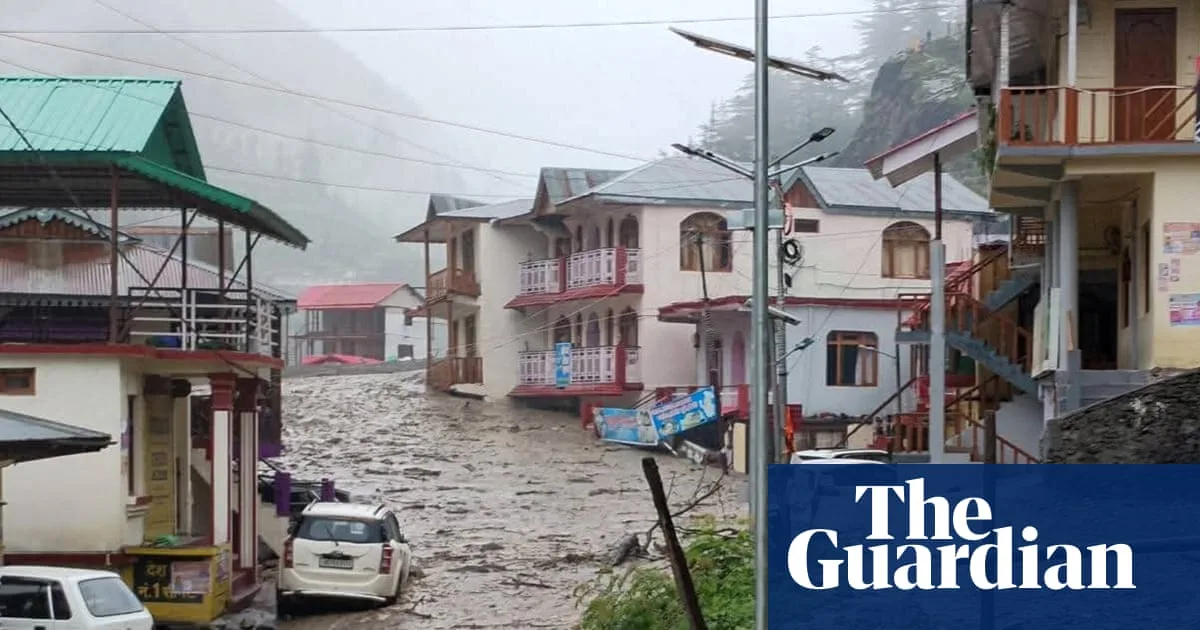
At least four people have died and around 100 remain missing after a devastating flash flood swept through the village of Dharali in Uttarakhand, northern India. The Indian Meteorological Department has identified a 'cloudburst' as the likely cause, with extreme rainfall of 210mm or more recorded in parts of the region over a 24-hour period.
Meteorologists define a cloudburst as an intense rainfall event over a concentrated area of 30sqkm or less, with precipitation rates of 100mm or more per hour. Such events are most common in mountainous regions during the monsoon season, according to Ruchit Kulkarni, an Indian meteorologist at the University of Melbourne.
The process involves orographic lift, where moisture from the Arabian Sea is forced upwards by the Himalayan foothills, forming towering cumulonimbus clouds that sustain large rain droplets. As Kulkarni explains, 'The cloud gets bigger and bigger and with no chance to have rainfall, it becomes so heavy that at a point, it starts bursting.'
Uttarakhand has a history of devastating cloudburst events, including the June 2013 Kedarnath floods which, according to a UN report, killed over 6,000 people. Studies suggest that more than half of the rainfall in that event was linked to increases in greenhouse gases and aerosol particles in the atmosphere.
Research has indicated a rise in extreme rainfall events across India in recent decades as global temperatures increase. While a bursting glacier or glacial lake could also have contributed to the current disaster, authorities are focusing on the cloudburst as the primary trigger. Rescue operations are ongoing as officials assess the full extent of the damage.