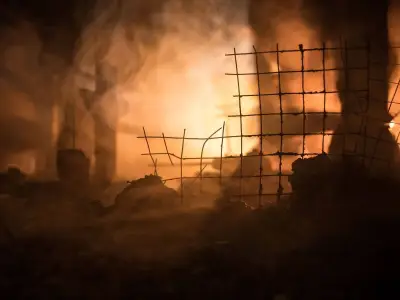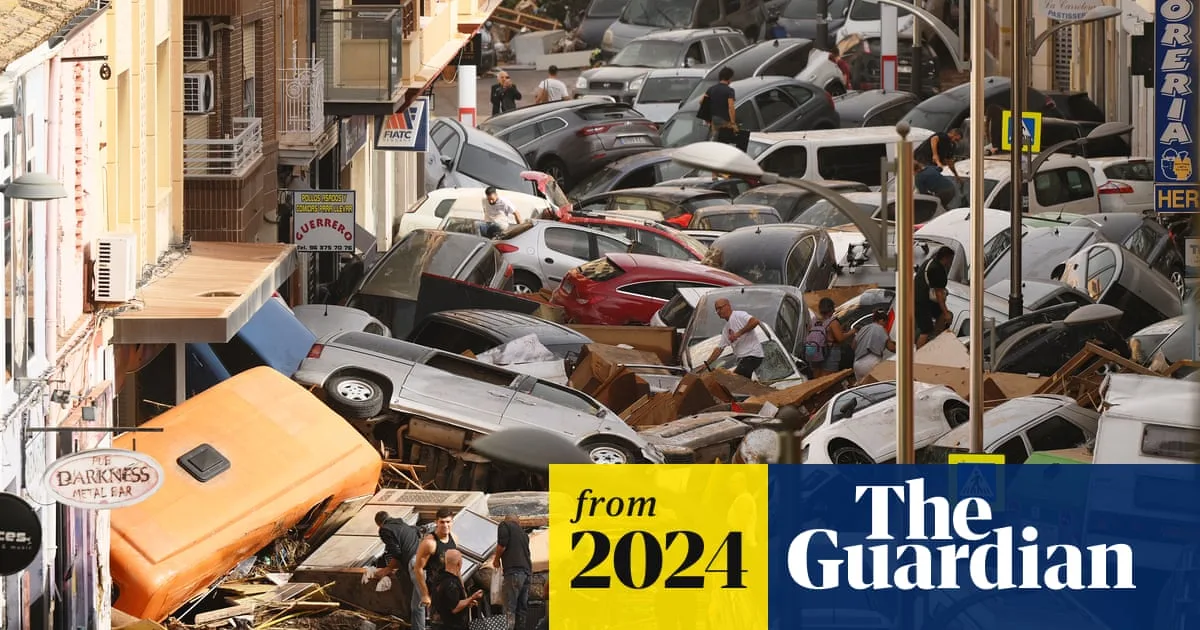
At least 205 people have died in Spain after torrential rains triggered the country’s deadliest floods in decades, turning village streets into raging rivers, destroying homes, and sweeping away bridges, railway tracks, and cars. The majority of the deaths occurred in the coastal region of Valencia, where nearly a year's worth of rain fell in just eight hours, according to the state-run agency. Deaths were also reported in Castilla-La Mancha and Andalucía's Málaga province.
In the worst-affected areas, more than 400 litres of rain per square metre fell on Tuesday. Rubén del Campo, a spokesman for Spain's meteorological agency, told El País: 'A relatively strong storm, a powerful downpour, like those we see falling in spring or summer, can be 40 or 50 litres per square metre. This practically multiplies it by 10.' The intense rain was attributed to a 'cold drop' phenomenon, where cold air moves over warm Mediterranean waters, creating atmospheric instability and towering clouds that dump heavy rain for hours.
Scientists have warned that rapidly warming Mediterranean waters, which have climbed as much as 5C above normal, intensify such downpours. Dr Friederike Otto, leader of world weather attribution at Imperial College London, said: 'No doubt about it, these explosive downpours were intensified by climate change.' An unknown number of people remain missing, while thousands are without electricity or phone service.
As Spain begins three days of national mourning, questions have been raised about the timing of the alert warning people to stay indoors. The meteorological agency issued a red alert for Valencia on Tuesday morning, but the civil protection service did not send the alert until after 8pm, by which time many were already trapped. One man told Eldiario.es that the alert came as he was trapped in his car with water up to his chest, saying: 'Just after 8pm, after an hour with water up to my neck and swallowing mud, the alert went off.'