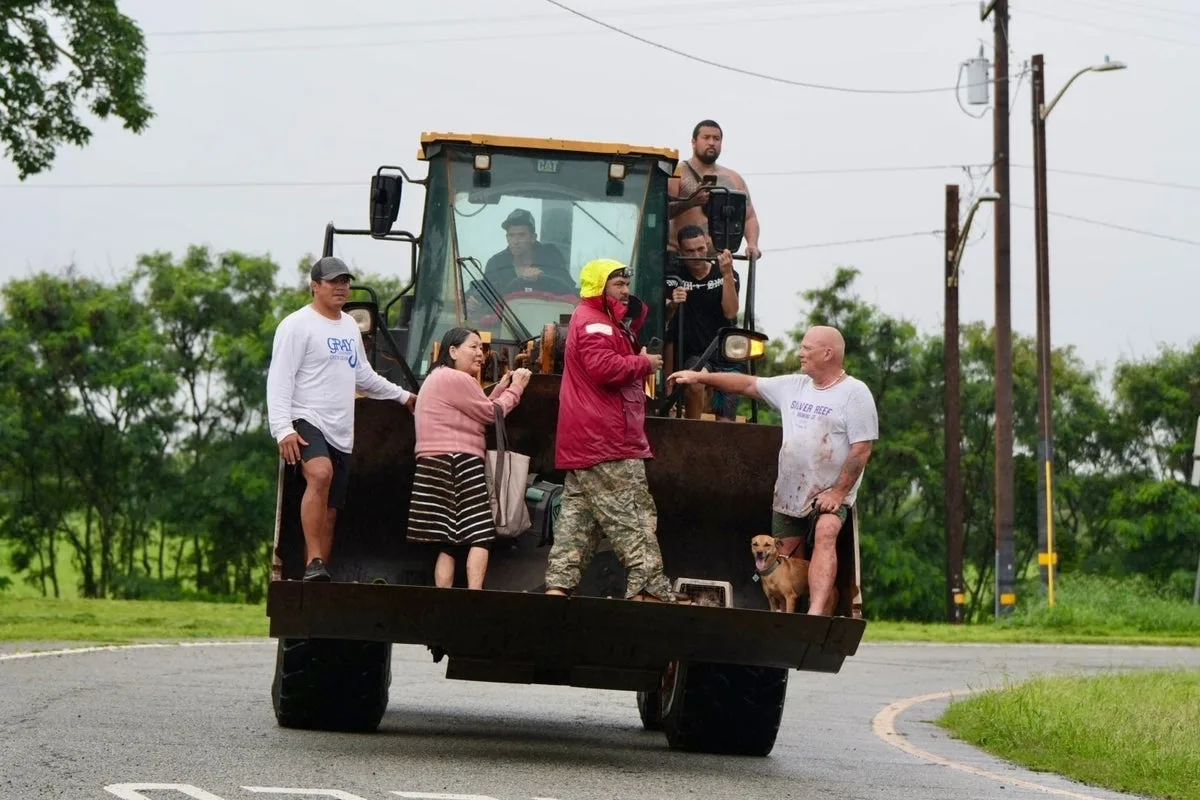
Residents of Oʻahu’s North Shore have criticised city officials for failing to issue timely evacuation orders during a devastating flood in March. Many were forced to wade or swim from their homes as water levels rose rapidly, with some reporting that they were not told to evacuate until their cars were submerged.
Officials initially defended their response, citing difficulty in making evacuation decisions, concerns about driving in darkness, and the unexpected severity of the storm. However, an investigation by Civil Beat has revealed that broken equipment and overlooked warning signs contributed to the delay, leaving the emergency operations centre 'flying blind' for critical hours.
The city’s emergency operations centre was fully staffed from 10 p.m., but director Randal Collins admitted they operated with limited information due to vague weather forecasts and poor visibility. Collins accepted full responsibility for the decisions made that night, stating, 'I’ll take ownership of the decisions we made that night.'
The National Weather Service (NWS) forecasts failed to predict the intensity of the storm, with initial estimates of only a few inches of rain. A doppler radar on Molokaʻi had been out of service since 12 March due to motor issues, hampering meteorologists’ ability to estimate rainfall location and intensity. Collins noted that the radar outage contributed to the 'vagueness of information' officials received.
Despite a stream gauge near Otake Camp showing a 2-foot rise in water levels by 8:25 p.m., officials did not issue a flash flood advisory until 8:52 p.m. via the HNL Alerts system. However, only 11% of Oʻahu’s population—about 110,000 people—had signed up to receive these alerts, limiting the reach of the warning.