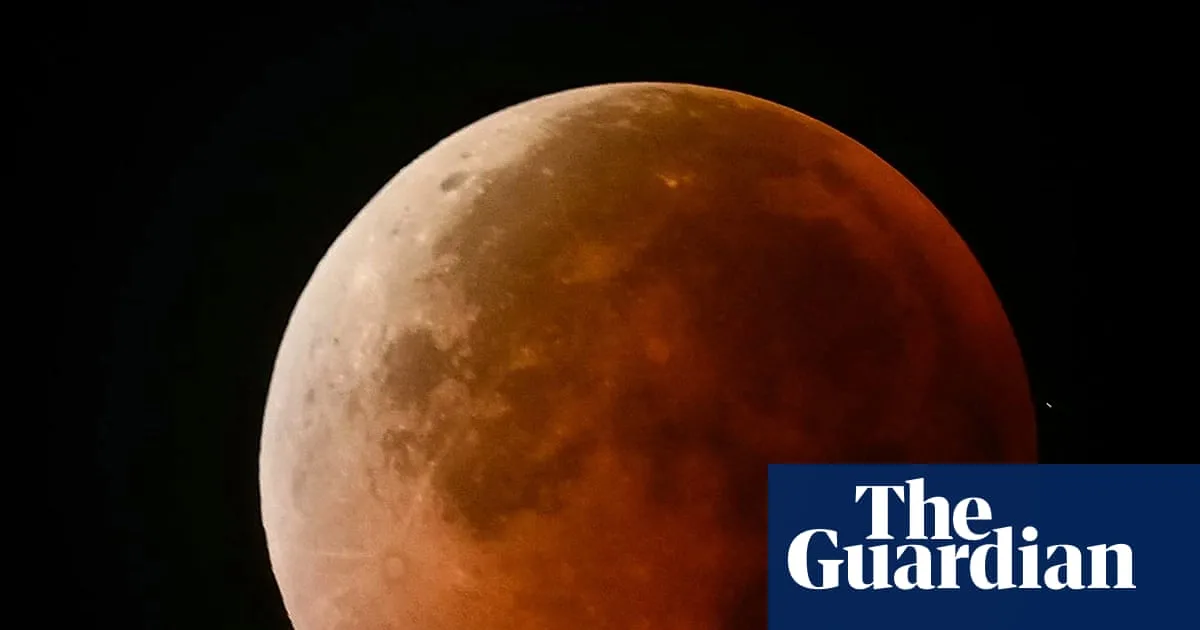
Stargazers across the UK are set for a rare celestial treat as a total lunar eclipse, known as a 'blood moon', will be visible on the night of 3 March. The phenomenon occurs when the Earth aligns between the sun and the moon, casting a shadow that turns the lunar surface a deep, coppery red.
Dr Rebecca Allen, an astrophysicist at Swinburne University, explains that any sunlight reaching the moon passes through Earth's atmosphere, transforming it into a 'deep, coppery red'. Dr Brad Tucker of the Australian National University adds that this is similar to how sunsets appear pink or red, with the light refracting to give the moon an orange-red hue.
For the best view, Dr Allen recommends finding a dark location away from city lights and allowing 10 to 15 minutes for eyes to adjust. Jupiter will also be visible high in the sky, creating what she calls 'a great pairing'. The eclipse will be the last total lunar eclipse visible for nearly three years, with the next occurring on New Year's Eve 2028.
In the UK, the eclipse will be visible in its entirety, with the total phase expected to last around an hour. Observers are advised to check local timings for the best viewing opportunities. The event has historical significance, with ancient cultures interpreting the blood moon as an omen, such as the Inca believing it was a jaguar attacking the moon.