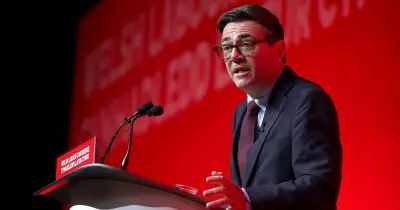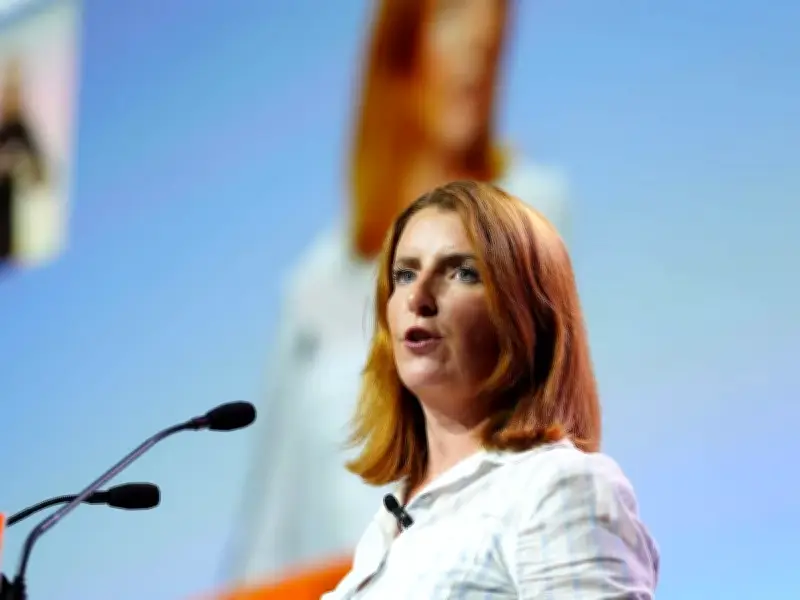
Louise Haigh will tell business leaders that the "failed status quo" on utilities such as water and energy is holding Britain back, as she makes the case for greater public control of essential services.
The First Secretary of State is expected to argue that privatised utilities are failing businesses as well as consumers, in an address to the CBI conference in London. The speech comes ahead of Andy Burnham's 10-year plan, due next month, where greater public control is expected to form a key plank.
Government's case for public control
Ms Haigh is expected to say: "This government will put pragmatism and public interest ahead of failed political ideology. Public control is not anti-business - it's about getting the foundations right, so that private enterprise can do what it does best."
The Prime Minister has criticised a "series of wrong turns" taken in the 1980s, when Margaret Thatcher sold off core utilities, arguing it has driven up costs for the public. Ms Haigh will warn that foreign governments own "significant stakes in our water, electricity and gas networks with returns paid to their taxpayers".
Criticism of the status quo
Ms Haigh will say: "The status quo is not the neutral, pragmatic centre ground. It's the outlier. An exception that no other nation is trying to emulate." She will point to high energy prices, grid connection delays and water pollution as factors holding back growth, and note that effective monopolies have resulted in a lack of genuine competition.
Clarifying that public control does not have to mean full-scale nationalisation, Ms Haigh will set out the Government's vision for "a new partnership with private capital built on clear rules, clear expectations and a fair return on investment".
Background and reaction
Mr Burnham has repeatedly discussed greater public control of essentials like water and energy since coming to power. In his Labour conference speech in September, he pledged to drive down energy costs with a new publicly-owned Great British Grid to overhaul the broken energy market.
The ageing grid has suffered from decades of underinvestment, with slow connections and a massive backlog to join the transmission network acting as a blocker for investment. GB Grid, a new publicly-owned company, aims to speed up grid connections for businesses and drive down costs by increasing competition in the market. The PM argued that energy costs are being dictated by global turbulence, with wars in Ukraine and Iran driving up bills for households and businesses.
The Conservatives accused Labour of treating nationalisation as a "magic wand for every industry and every problem".