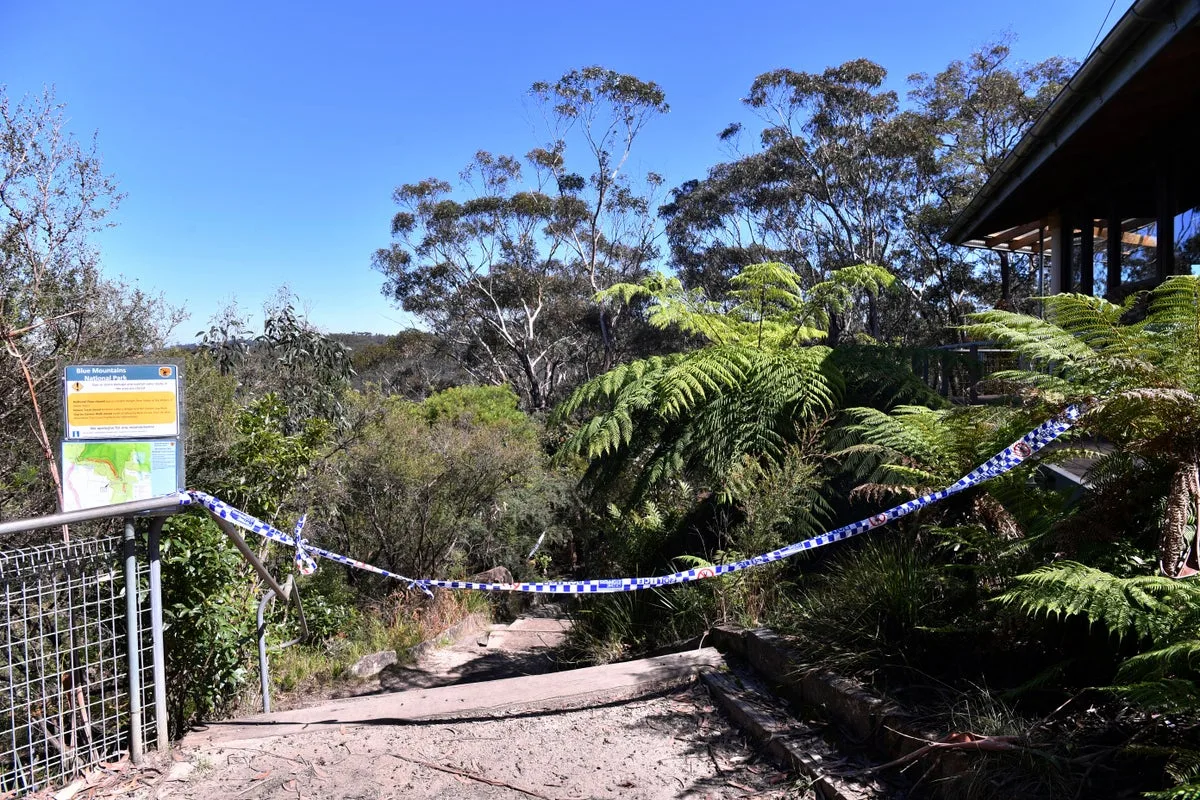
A 16-year-old boy has been found dead in a remote section of Australia’s Blue Mountains National Park after becoming separated from a friend during a multi-day hiking trip, police said.
The teenager had travelled with a 17-year-old companion to the town of Leura, west of Sydney, on Tuesday before setting off on foot towards Mount Hay to begin a three-day bushwalking trip. Police said the two became separated in the Grose Valley Wilderness shortly before 6pm on Wednesday, prompting the older boy to activate his personal locator beacon.
A land and air search was launched involving police, specialist rescue teams, paramedics and helicopters. The 17-year-old was later winched to safety from the Acacia Flat campground in the Blue Gum Forest, a secluded site at the bottom of the Grose Valley that can only be accessed on foot via steep and difficult tracks. Search teams were unable to locate the younger boy at the time.

The body of the 16-year-old was found about 1pm on Thursday in a creek in the Blue Gum Forest, police said. A post-mortem examination will be conducted to determine the cause of death, and a report will be prepared for the coroner.
Sonya Muhlsimmer, president of the Upper Blue Mountains Bushwalking Club, said it was easy for walkers to become disoriented near Acacia Flat, particularly if they strayed from established tracks. “It can be a wild sort of an area,” she told ABC News. “There are a couple of footpads down there, if you wander off, you might not be able to find that little track again. It’s quite easy to get lost.”
She highlighted the importance of personal locator beacons, careful planning and staying together while hiking in remote areas. “It can literally save your life,” she said, urging bushwalkers to share their plans and carry offline navigation tools.